When the Office of Management and Budget stopped following a law that requires them to publicly share how the White House is using federal taxpayer dollars, we sued and forced them to restore the data.
Stopping the Consolidation of Power
our work
We work to prevent unchecked power, defend the rule of law, and protect the right to dissent.
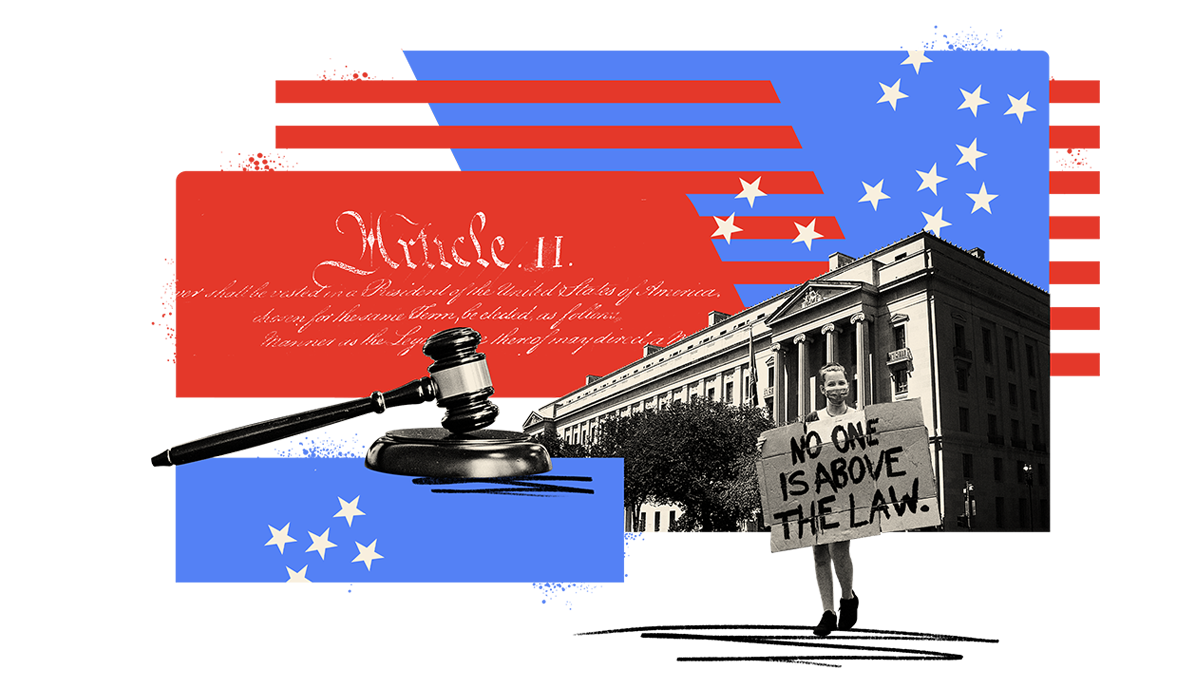
The United States must maintain three co-equal branches of government, each with their own responsibilities.
Would-be authoritarians often abuse their power, using it to eliminate checks and balances, quash dissent, target already marginalized communities, and deepen political divisions.
The Constitution and the laws we have built around it provide tools to constrain authoritarian behavior — but many of the norms and guardrails that help define our democracy are not written into law and are not self-enforcing. Together these restraints must be deployed (and strengthened) to prevent the executive branch from abusing its power and to ensure the law applies equally to everyone, from the most powerful to the least.
- Uphold the principle that nobody is above the law.
- Ensure meaningful checks and balances on executive power.
- Stop abuses that target marginalized groups and their ability to participate in democracy.
- Protect the ability of the public and the press to voice dissenting views.
- Protect independent, non-politicized law enforcement and civil servant workforces.
We are working with legislators in a number of states on legislation that would allow people to sue any official — federal, state, or local — who violates their constitutional rights.
Related News & Resources
-

The dangers of military intervention in civilian law enforcement
- Stopping the Consolidation of Power
- Research & Analysis
- Reports
-

Safeguarding the role of America’s military lawyers
- Stopping the Consolidation of Power
- Research & Analysis
- White Papers
-
Defending the media against FCC censorship
- Stopping the Consolidation of Power
- Legislation & Policy
- Litigation
-
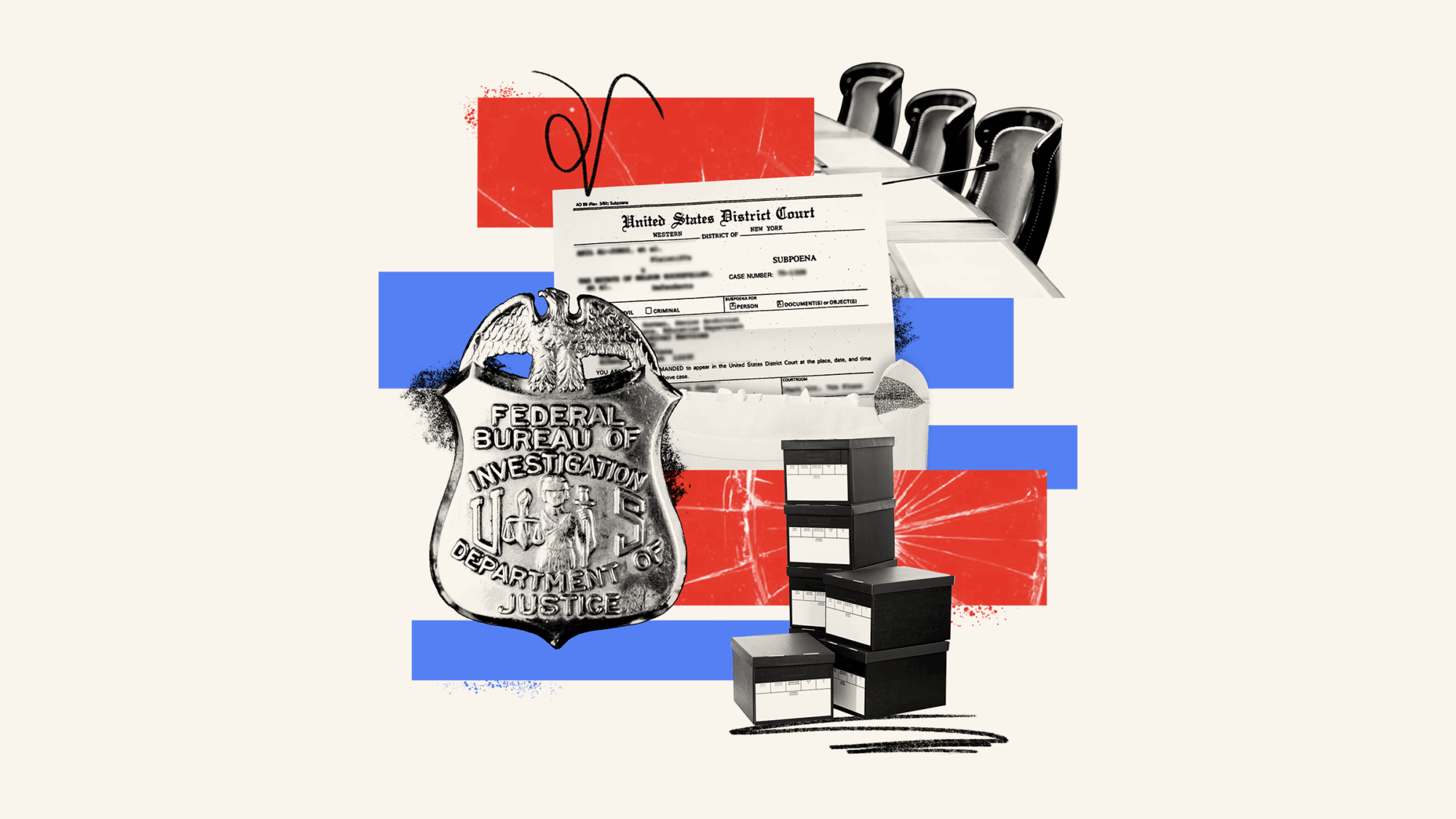
Nonprofit Toolkit: Resources for organizations facing government investigations
- Building Pro-Democracy Collective Action
- Stopping the Consolidation of Power
- Toolkit

Defending Maine communities from federal surveillance and intimidation
Protect Democracy is suing the Department of Homeland Security for violating the constitutional rights of Portland residents.
September 9, 2026

Protect Democracy applauds Governor Newsom’s signing of the No Kings Act
California is now the fifth state this year to let residents sue any government official for constitutional violations — meaning these laws cover more than 70 million Americans.
September 29, 2026
Speaking up from within the government
A practical guide to navigating speaking to reporters or the public while protecting yourself and respecting the law.
September 29, 2026
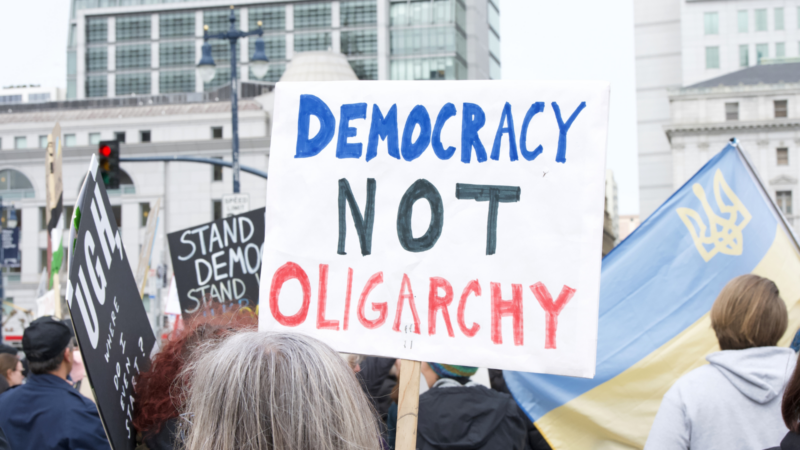
How disgorgement could address President Trump’s corruption
The legal principle of disgorgement is simple, common sense, and well-settled in American law: You don’t get to keep what you stole.
September 25, 2026
Tracking retaliatory use of arrests, prosecutions, and investigations by the Trump administration
How to tell if the Trump DOJ is enforcing the law or retaliating against political enemies.
September 21, 2026
EPIC says Trump administration can’t use its own delays to evade review of voter citizenship lists
EPIC today urged a federal court to swiftly rule on the Trump administration’s plan to create and distribute “State Citizenship Lists."
September 18, 2026
Restoring funding for Congressionally mandated education programs
We partnered with other organizations and individual citizens to sue the Office of Management and Budget to restore funds that Congress mandated for critical education services.
September 17, 2026
Bipartisan coalition of former top FCC officials back ABC’s First Amendment lawsuit against FCC
A bipartisan coalition of former FCC officials filed an amicus brief supporting ABC’s request for emergency relief in its lawsuit challenging the FCC’s early review of broadcast licenses.
September 17, 2026

Researchers challenge NIH screening of grants for disfavored viewpoints
Today, researchers filed a class action lawsuit challenging the National Institutes of Health’s (NIH) policy of blocking grants in order to censor views it disagrees with.
September 16, 2026

President Trump’s corruption, explained
The president’s corruption can be directly connected to his election interference efforts, and his broader work to consolidate power.
September 14, 2026

Court blocks Trump-Vance administration’s unlawful loyalty question for federal job applicants
A federal court today blocked the Trump-Vance administration from using its unlawful “loyalty question” on federal civil service job applications.
September 11, 2026