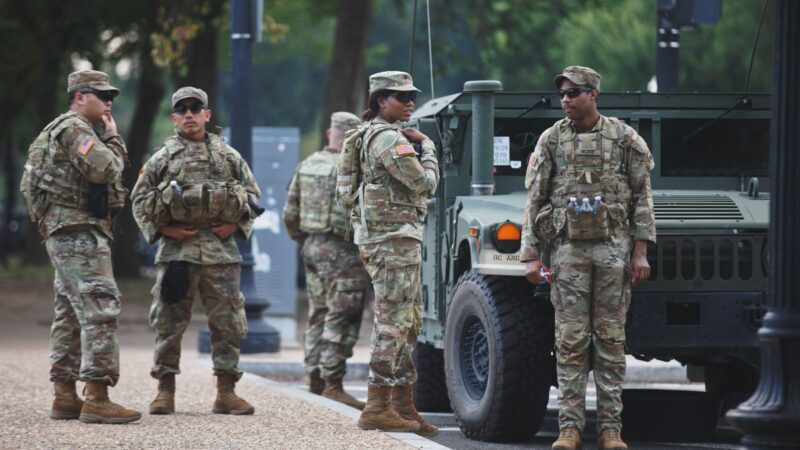
Why the U.S. military is not a law enforcement organization
The military and law enforcement each serve as armed elements of the state, but have very different functions, training, and legal requirements.
Advanced technologies present opportunities and challenges for our democracy. We seek to harness advanced technologies to fuel democratic renewal while opposing their authoritarian adoption.
Authoritarians often try to consolidate power by transforming the military into a personal and partisan tool. Although modern-day authoritarians don’t always resort to violence, they use the latent threat of military force to suppress dissent and further entrench themselves. They may also weaponize the military to interfere more directly with elections — through intimidation, domestic deployments, or interference with the mechanics of voting.
For that reason, maintaining a professionalized, nonpartisan military that serves the Constitution — not any single leader — is crucial to preserving and protecting democracy. A military that prioritizes merit, discipline, and institutional integrity over loyalty is also better equipped to defend the nation against its actual enemies. The men and women who volunteer to serve risk their lives to protect the country should never be ordered to oppress their fellow citizens.
The military and law enforcement each serve as armed elements of the state, but have very different functions, training, and legal requirements.
The Trump administration’s expanded domestic use of the military threatens to normalize troops on American streets, and sets the stage for more militarization of civilian society and politicization of the military. In 2025 and 2026, troops were deployed to multiple cities, costing taxpayers hundreds of millions of dollars, with courts repeatedly denying the legal basis for those deployments. Deploying troops to perform domestic law enforcement duties breaches the civil-military line dating back to the American Revolution. Using troops for law enforcement is a common authoritarian tactic that inevitably backfires, undermining military readiness and morale while failing to actually improve public safety.
Beginning in early 2025, the Trump administration undertook an unprecedented purge of Judge Advocates General and other senior uniformed leaders, establishing a pattern that privileges political loyalty over expertise, risks chilling candid military advice, and strains the legal norms around professional military independence. When senior officers are removed for perceived disloyalty or political beliefs, it sends a chilling message through the ranks that the military serves the president, not the Constitution. That message is compounded by the administration’s blocking of numerous high-ranking promotions – decisions driven not by misconduct or poor performance, but by officers’ perceived associations, race, or gender. Conditioning promotions on political loyalty hollows out institutional expertise and undermines the military’s nonpartisan ethos. It is critical that merit, not perceived loyalty, determine who is elevated up through the ranks.
The military’s professional culture and institutional traditions build discipline, readiness, and an apolitical ethos. But recent efforts to inject politics into the military, including overtly partisan speeches at military academies and installations, threaten the civil-military balance that keeps politics out of the military and the military out of civilian society. Politicizing the military would be a perilous turn for our democracy, threatening to pit the public against its own military, degrading national security readiness, and undermining civil authorities and the freedoms each of us is guaranteed under the U.S. Constitution. Keeping politics out of the military is the shared responsibility of the military itself, civilian leadership in the administration, and Congress.
Free and open public debate is essential when it comes to matters of national security, yet this administration has also engaged in troubling efforts to suppress dissent from veterans and limit independent press coverage of the Pentagon. Time and again, federal courts have recognized that these efforts are unlawful. Echoing the concerns raised by more than 70 retired generals, admirals, and service secretaries represented by Protect Democracy, a federal judge enjoined Secretary Hegseth’s effort to punish Navy veteran and U.S. Sen. Mark Kelly (D-AZ) for his protected political speech. Another judge similarly concluded that the Secretary’s attempt to condition media access on government approval of press coverage was illegal.
Explore this work
Understanding the National Guard Understanding the National Guard
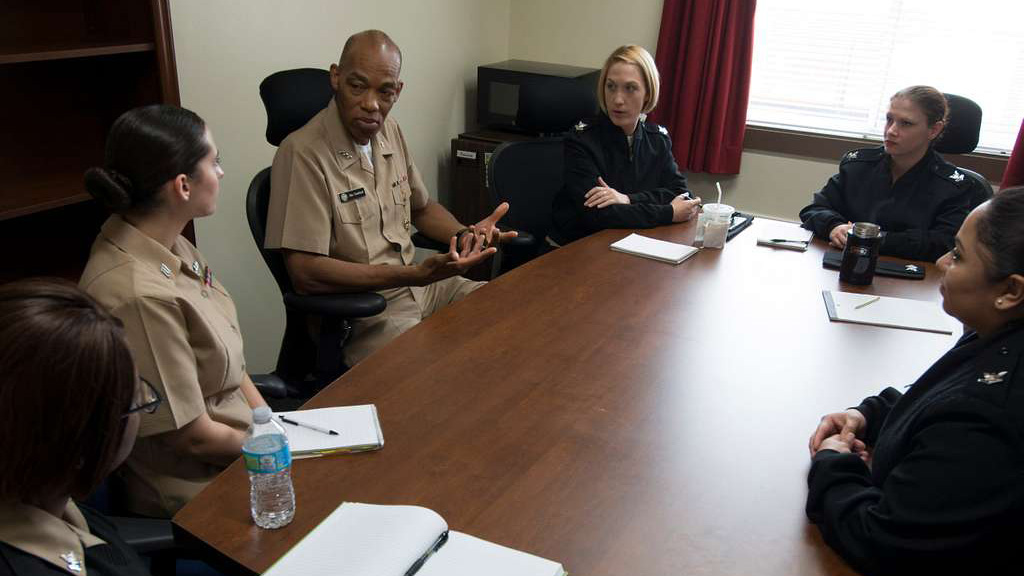
Safeguarding the role of America’s military lawyers Safeguarding the role of America’s military lawyers
How to reform domestic deployment authorities How to reform domestic deployment authorities
How to stop Trump’s National Guard weaponization How to stop Trump’s National Guard weaponization
The Insurrection Act, explained The Insurrection Act, explained
Presidential emergency powers, explained Presidential emergency powers, explained
Former service secretaries and senior officers on veterans' protected political speech Former service secretaries and senior officers on veterans' protected political speech
Former JAGs on illegality of military lawyers prosecuting civilians Former JAGs on illegality of military lawyers prosecuting civilians
Former national security leaders on the impropriety of voting barriers for service members and their families Former national security leaders on the impropriety of voting barriers for service members and their families
Former service secretaries and four-stars on dangers of improper domestic National Guard deployments Former service secretaries and four-stars on dangers of improper domestic National Guard deployments
Building a stronger, more resilient democracy is possible, but we can’t do it alone. Become part of the fight today.
Donate
Sign Up for Updates Sign Up for Updates
Explore Careers Explore Careers
How to Protect Democracy How to Protect Democracy