Challenging politically-driven attacks on science and medical research
- April 4, 2025
American Public Health Association v. National Institutes of Health

For nearly 100 years, the National Institutes of Health (NIH) has worked to improve public health by directing most of its budget to thousands of researchers at universities, medical schools, and other institutions in all 50 states. Guided by congressional mandates, regulatory requirements, and scientific expertise when determining what research to fund, NIH’s operations were upended by an abrupt and unlawful policy change beginning in February 2025 that led to the immediate termination of hundreds of grants already awarded to researchers, as well as the denial and unreasonable delay of grant applications submitted by researchers. The government justified its actions by asserting the work is “unscientific” because it is based on “gender identity” or “Diversity, Equity, and Inclusion” (“DEI”), which it declares “unscientific.” The government has also canceled research related to “vaccine hesitancy,” and “COVID” among other disfavored topics.
“Apart from being illegal, the government’s actions are a cynical attempt to corrupt science and threaten democracy itself. By excluding entire topics and demographics even from scientific study, the NIH divides and polarizes communities, undermines our shared sense of reality, and demonizes marginalized groups. Challenging these actions is vital for science, for equality, and for democracy.
Shalini Goel Agarwal, Protect Democracy special counsel
Background
Protect Democracy, along with the ACLU, ACLU of Massachusetts, Emery Celli Brinckerhoff Abady Ward & Maazel, and the Center for Science in the Public Interest filed a lawsuit on their behalf against NIH and the U.S. Department of Health and Human Services (HHS) to stop the ideological purge of this life-saving research — research that includes LGBTQIA+ individuals, women, and people of color; that seeks to understand the reasons for disparities in health outcomes; and the causes of vaccine hesitancy. By terminating these grants and denying, and delaying these applications, the Trump Administration isn’t merely breaking the law, it is corrupting knowledge and access to healthcare for marginalized communities and ultimately damaging scientific inquiry in institutions critical to our democracy. It is also surrendering the American public to infectious diseases, delivering a devastating blow to our nation’s world-leading scientific research establishment, throwing away the taxpayer-funded investment in projects that have been shuttered midway, and casting countless communities across the country into economic uncertainty.
This ideological purge is illegal because:
This ideological purge violates the Administrative Procedure Act
In making its arbitrary and capricious decision to terminate grants and deny or delay applications for alleged DEI, transgender issues, or vaccine hesitancy, based on zero scientific input, and apparently in order to effectuate executive orders ruled illegal, the NIH did not even try to explain why a change in medical research priorities was necessary.
The administration recklessly purged these grants not for any scientific reason, or to make government research more efficient, or to save more lives. The decision was made in animus, because, in the administration’s view, those who might benefit from the research are persona non grata. Hate is not healthcare.
PlaintiffsPlaintiffs
The plaintiffs are researchers, public health associations, unions, and a reproductive research organization whose research in the areas of Alzheimer’s, drug treatment, pain management, sexual violence, HIV, cancer therapies, and suicide intervention were improperly cancelled by NIH. They are:
- The American Public Health Association, which has 23,000 public health professional members
- IBIS Reproductive Health, which partners on research to advance sexual and reproductive autonomy
- International Union, United Automobile, Aerospace, and Agricultural Implement Workers (UAW), which represents about 120,000 workers in higher education
- Dr. Brittany Charlton, associate professor at Harvard Medical School and Harvard T.H. Chan School of Public Health and founding director of the LGBTQ Health Center of Excellence. She is a leading scholar of LGBTQ health inequities, particularly in cancer and reproductive health.
- Dr. Katie Edwards, professor at the University of Michigan School of Social Work. Dr. Edwards’ research focuses on preventing sexual and related forms of violence among minority communities, using evidence-based, affirming, and culturally-grounded approaches.
- Dr. Peter Lurie, an experienced research physician and the President and Executive Director of the Center for Science in the Public Interest, which advocates for improving public health through science-based policies and promoting scientific integrity. From 2014–17, he was an Associate Commissioner at the Food and Drug Administration, where he worked on the regulation of over-the-counter drugs, among other projects.
- Dr. Nicole Maphis, a postdoctoral fellow at the University of New Mexico’s School of Medicine. Her research explores how alcohol usage affects the risk of developing Alzheimer’s disease. She is the first and only person in her family to graduate college and comes from a low-income background.
Defendants
- National Institutes of Health
- Jay Bhattacharya, Director of the National Institutes of Health
- United States Department of Health and Human Services
- Robert F. Kennedy, Secretary of Health and Human Services
Case Documents
APHA Plaintiffs' Answering Brief | First Circuit Court of Appeals – Nov. 12, 2025 APHA Plaintiffs' Answering Brief | First Circuit Court of Appeals –
Order Denying in Part and Granting in Part Defendants' Application for Stay | Supreme Court of the United States – Aug. 21, 2025 Order Denying in Part and Granting in Part Defendants' Application for Stay | Supreme Court of the United States –
APHA Respondents' Opposition to Application for Stay | Supreme Court of the United States – Aug. 1, 2025 APHA Respondents' Opposition to Application for Stay | Supreme Court of the United States –
Order Denying Defendants' Motion to Stay the Case Pending Appeal | First Circuit Court of Appeals – July 18, 2025 Order Denying Defendants' Motion to Stay the Case Pending Appeal | First Circuit Court of Appeals –
Order for Partial Separate and Final Judgment | U.S. District Court of Massachusetts – July 2, 2025 Order for Partial Separate and Final Judgment | U.S. District Court of Massachusetts –
Reply In Support of Plaintiff's Motion for a Preliminary Injunction – May 19, 2025 Reply In Support of Plaintiff's Motion for a Preliminary Injunction –
Brief of Amici Curiae | Biological and Biomedical Research Societies in Support of Plaintiffs' Motion for Preliminary Injunction – May 02, 2025 Brief of Amici Curiae | Biological and Biomedical Research Societies in Support of Plaintiffs' Motion for Preliminary Injunction –
Brief of Amici Curiae | The Association of American Medical Colleges et al. – April 28, 2025 Brief of Amici Curiae | The Association of American Medical Colleges et al. –
Memorandum in Support of Plantiff's Motion for Preliminary Injunction – April 25, 2025 Memorandum in Support of Plantiff's Motion for Preliminary Injunction –
Complaint Filing in the U.S. District Court of Massachusetts – April 2, 2025 Complaint Filing in the U.S. District Court of Massachusetts –
Featured Press

Trump’s NIH Axed Research Grants Even After a Judge Blocked the Cuts, Internal Records Show
May 7, 2025

UCSF researchers lose grant money
April 28, 2025

The Trump Administration Just Made Catastrophic Cuts That Will Affect You Or Someone You Know
April 27, 2025
‘I’m a scientist — here’s why I’m suing RFK Jr.
April 5, 2025

‘An attack on scientific progress itself’: Health researchers sue to overturn NIH funding cuts
April 2, 2025

Scientists Sue NIH, Saying Politics Cut Their Research Funding
April 2, 2025
Harvard researcher among plaintiffs suing federal government over NIH terminations
April 2, 2025
Related Content
-
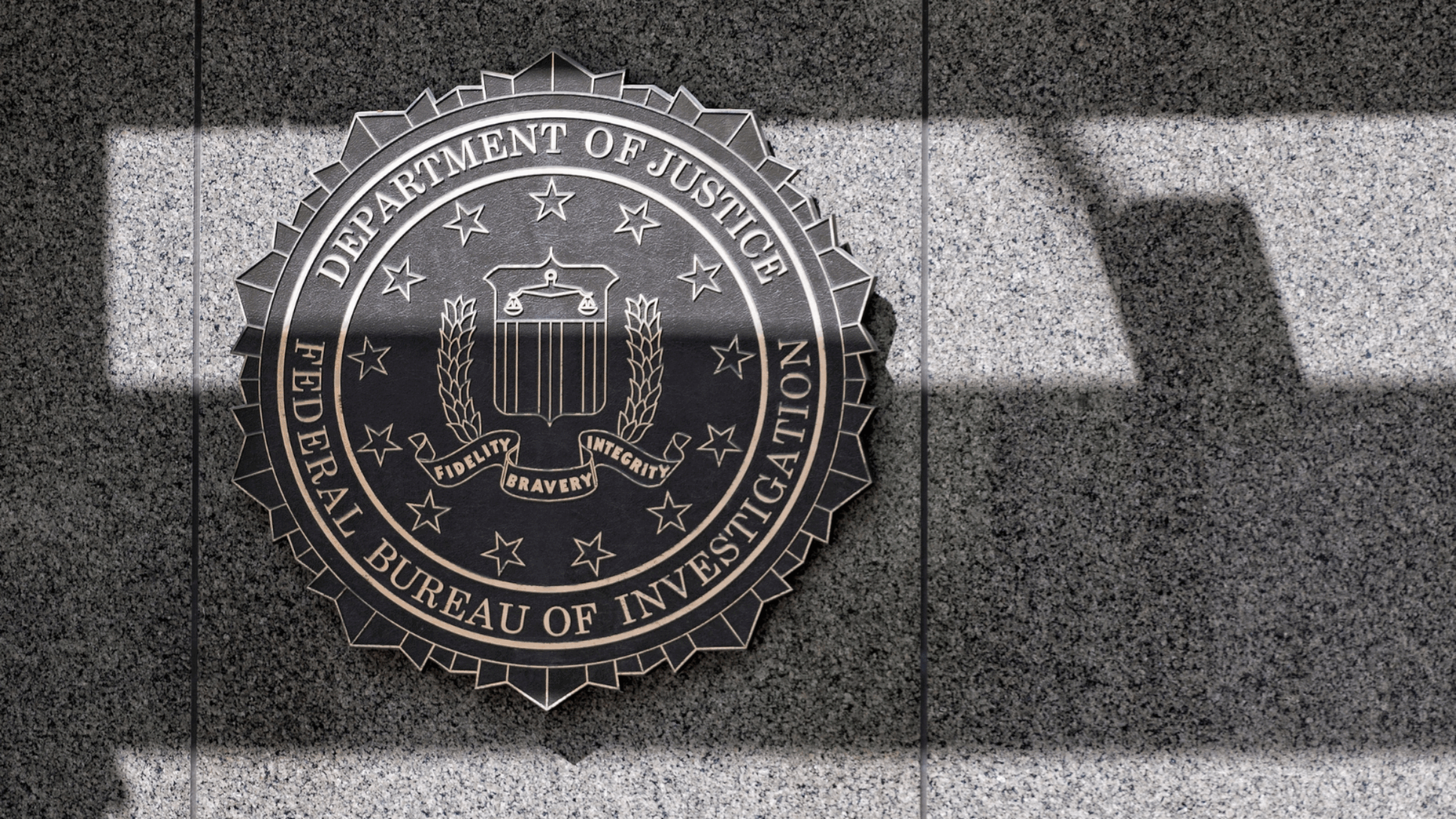
Tracking retaliatory use of arrests, prosecutions, and investigations by the Trump administration
- Stopping the Consolidation of Power
- Research & Analysis
- Analysis
-
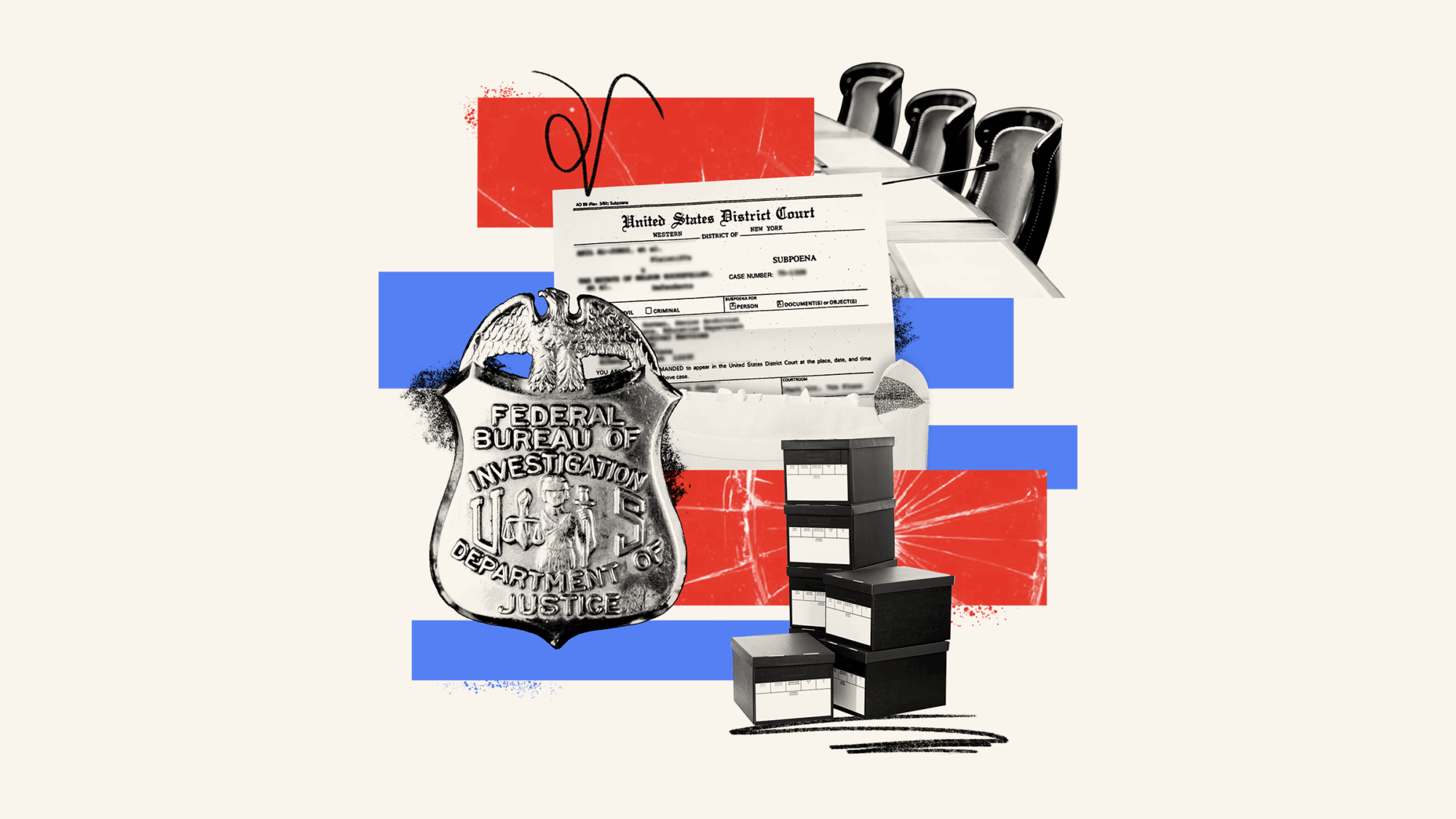
Nonprofit Toolkit: Resources for organizations facing government investigations
- Building Pro-Democracy Collective Action
- Stopping the Consolidation of Power
- Toolkit
-

Nonprofit primer: What if…your organization is concerned about an IRS investigation?
- Building Pro-Democracy Collective Action
- Stopping the Consolidation of Power
- Toolkit
-
Protecting voter privacy and the integrity of U.S. elections
- Protecting Elections
- Litigation
- Case Documents
Join Us.
Building a stronger, more resilient democracy is possible, but we can’t do it alone. Become part of the fight today.
Donate
Sign Up for Updates Sign Up for Updates
Explore Careers Explore Careers
How to Protect Democracy How to Protect Democracy