A guide to understanding the federal grand jury
- April 3, 2026
| This page provides general educational information about federal grand juries. It is not legal advice. This information focuses on federal grand juries and may not apply to grand jury proceedings in other jurisdictions. |
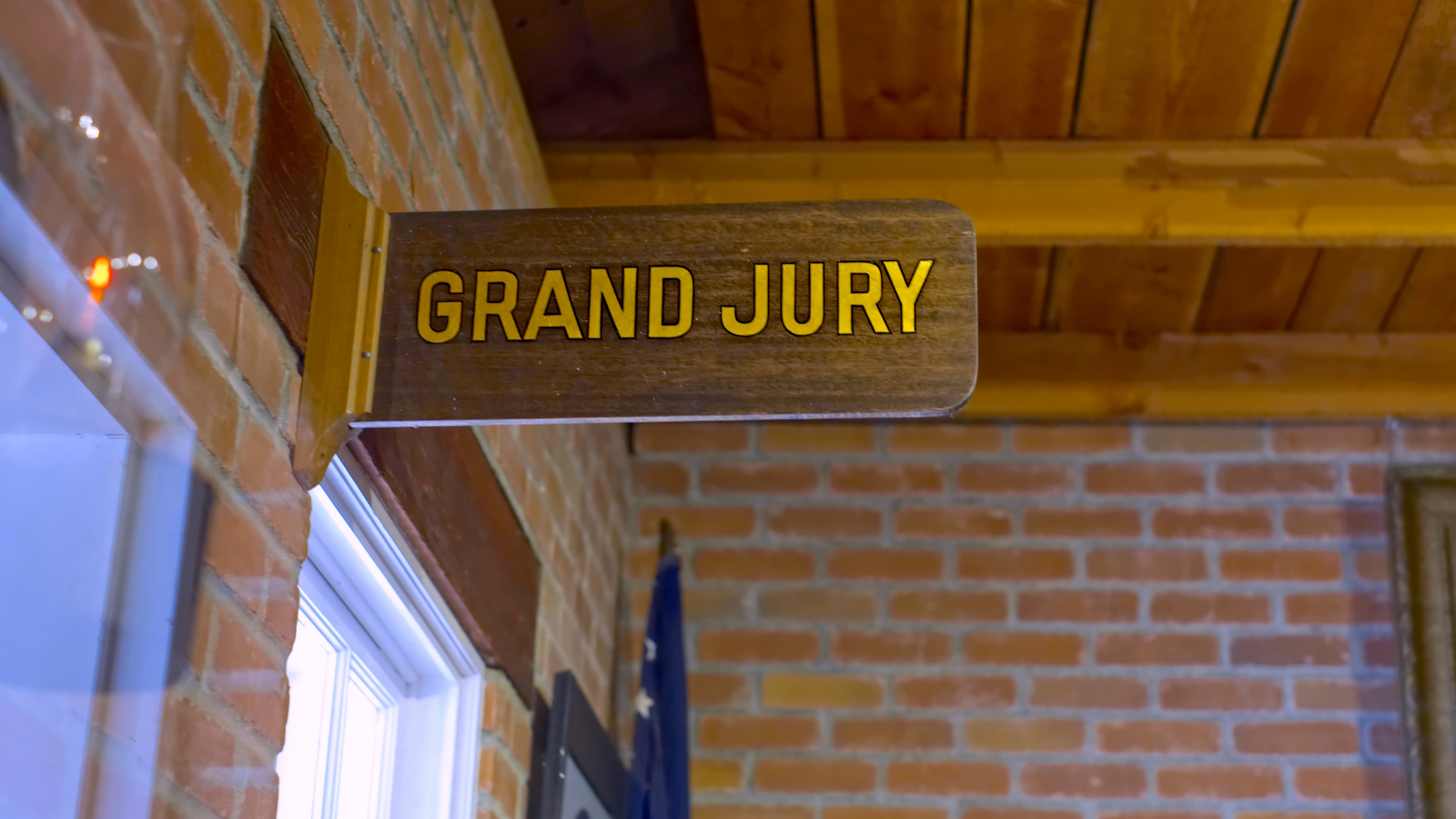
A grand jury summons marks the beginning of a serious responsibility. Those selected as grand jurors step into one of the most powerful and essential roles in the American legal system. While grand jury duty can be a significant commitment of a juror’s time, it is also a rare opportunity to serve as a constitutional gatekeeper, ensuring that the ultimate power of the legal system remains in the hands of the people.
Grand jurors are part of a tradition the Founders specifically wrote into the Bill of Rights to protect all of us from government abuses. By requiring that everyday people — not government officials — decide whether the federal government can bring serious criminal charges against anyone, the Fifth Amendment creates a vital shield against the abuse of government power. Grand jurors act as an independent watchdog for their neighbors, ensuring the government cannot use the legal system to harass, retaliate against, or bankrupt anyone without legitimate, evidence-based cause.
What is a grand jury?What is a grand jury, and how does it work?
Grand jurors hold the keys to the federal criminal justice system. The government cannot formally charge someone with a felony unless a grand jury first decides that the evidence against them is strong enough to move forward.
Grand jurors serve on a panel of 16 to 23 everyday citizens who evaluate whether the government’s evidence meets the “probable cause” standard. Unlike a trial jury, they are not deciding if someone is guilty “beyond a reasonable doubt.” Instead, they are asking: “Has the prosecutor established a reasonable basis to believe this person committed a crime?”
Grand jurors meet in private and hear only from the prosecutor and any witnesses. They then decide whether to issue an indictment — the formal green light for a case to move forward. The decision to indict requires at least 12 votes in favor but does not need to be unanimous.
Why is serving on a grand jury important?Why is serving on a grand jury important?
Grand jurors do not work for the prosecutor; they work for the Constitution. Grand juries have three powerful features:
- They have independent authority: A grand jury belongs to no branch of government. It is a randomly selected panel of laypeople, not politicians or legal professionals.
- They function as “gatekeepers”: Under the Fifth Amendment, no federal felony charge can proceed without a grand jury’s consent. If a grand jury says “no,” a prosecution stops in its tracks.
- They play a high-stakes role in the justice system: Because an indictment can destroy a reputation or career, and because a grand jury’s decision is virtually unreviewable, the grand juror’s role is one of the most consequential in our democracy.
How should grand jurors approach their work?
A grand juror may hear many cases, but their role is never to simply “rubber-stamp” the government’s requests. A grand juror is an active investigator, not a passive observer.
Grand jurors need not assume the government is always right. In recent years, there have been documented instances of federal agents misleading grand juries or withholding key facts. This makes a grand juror’s skepticism an important tool for ensuring a fair process.
Grand jurors can be an effective shield for their community by approaching every case with a critical eye. Grand jurors can fulfill this role in few key ways:
- Grand jurors can demand the full story: Grand juries are not limited to hearing summaries or second-hand accounts. They can request individual pieces of evidence so they can be evaluated, and they can ask the government to subpoena witnesses.
- Grand jurors are the judge of credibility: Grand juries are the only ones who get to decide if a witness is telling the truth. They have every right to submit questions for witnesses and ask prosecutors for legal clarity. They can assess how well a given witness could see or hear the things they are describing, how well their testimony matches other objective evidence, such as video or audio recordings, their level of knowledge about matters on which they are offering testimony, the consistency of other statements they have made, and any biases they might have.
- Grand jurors must remain independent: The grand jury’s job is to be an independent judge of whether the evidence is solid and believable. Grand juries must ensure the government has “reasonably trustworthy information” — not just a hunch or “bare suspicion” — to believe a crime was committed. They are there to fairly scrutinize the government’s work, not to help anyone “win.”
- Grand jurors can ask hard questions: There is an old cliché that a grand jury would “indict a ham sandwich,” but the actual job of a grand jury is the opposite. They are there to ask the hard questions and ensure the government has met the high bar required to formally accuse someone of a crime.
- Grand jurors must keep the process fair: Prosecutors are a grand jury’s legal advisers, not its bosses. If a prosecutor makes misleading statements, introduces their personal opinions, or exhibits other concerning behavior, grand jurors can and should report them to their foreperson (or directly to the supervising judge).
What is the prosecutor’s role?
The prosecutor is there to present and summarize evidence and to act as the grand jury’s legal adviser, but they do not run the room — the grand jury does. Think of them as a guide who provides the information the grand jury needs to decide if a case is strong enough to move forward.
To ensure they don’t unfairly influence the grand jury’s decision, prosecutors must follow strict rules:
- Stick to the facts: Prosecutors present evidence to the grand jury, but they are not allowed to express their personal opinions about the evidence or the credibility of witnesses.
- No off-the-record information: Prosecutors cannot discuss specific facts or rumors that have not been officially presented to the grand jury as evidence.
- Hands-off deliberations: Prosecutors are not allowed to listen to or engage with jurors’ deliberations. When it is time for the grand jury to discuss the case and vote, they must leave the room.
- Respect silence: The government cannot compel a target to testify before a grand jury, though they may extend an invitation to do so. Because these proceedings are secret, a target may not even know they are under investigation. Thus, a prosecutor should never treat a target’s silence as evidence of their guilt.
- Honesty above all: Prosecutors must never mislead the grand jury about what the law says or what the evidence shows.
What if grand jurors suspect the prosecutor is overstepping or has done something impermissible?
The prosecutor is the grand jury’s legal adviser, not its boss. If a grand juror believes a prosecutor is being misleading, pressuring them, or otherwise acting unfairly, they have the right and the duty to speak up.
If something improper appears to be happening, a grand juror can take the following steps:
- Speak to the foreperson: A grand juror’s first step usually is to notify the grand jury foreperson. They can pause the proceedings and bring the concern to the supervising judge.
- Go directly to the judge: In the rare event that the foreperson is unable or unwilling to act, any grand juror has the right to contact the supervising judge directly.
- Protect secrecy: When reporting a concern, grand jurors must still be careful not to leak details of the case to anyone other than the judge or designated court personnel. They are part of the system and are there to hear these concerns privately to protect the integrity of the process.
By holding the prosecutor to the rules, grand jurors fulfill their role as a constitutional gatekeeper, ensuring that the “shield” of the grand jury remains strong and independent.
How do grand jurors hold the government to its burden?How do grand jurors hold the government to its burden?
A grand juror’s job is not to get in the way of lawful prosecutions, but to stop unjust ones. Grand jurors do this by holding the prosecutor to a specific legal standard called “probable cause.”
The Supreme Court defines probable cause as a “reasonable ground for belief of guilt.” Think of it as the middle ground of evidence: It requires much more than just a “hunch” or “bare suspicion,” but it doesn’t require the proof of guilt “beyond a reasonable doubt” needed to convict someone at a trial. Essentially, the grand jury is asking: “Would a person of reasonable caution look at the information presented and believe a crime was committed?”
To uphold this standard, grand jurors do the following:
- Grand jurors are active inquirers: Grand jurors are the judge of whether the information presented is “reasonably trustworthy.” If something doesn’t add up, they can ask for clarification.
- Grand jurors demand primary evidence as needed: Grand jurors need not rely on a prosecutor’s summary. They can ask to see original documents or to hear from firsthand witnesses.
- Grand jurors monitor the prosecutor’s conduct: The prosecutor is the grand jury’s legal adviser, not its supervisor. They are strictly forbidden from sharing their personal opinions on a witness’s credibility or the defendant’s guilt.
- Grand jurors protect the process: If grand jurors feel a prosecutor is misleading the jury, discussing facts not in evidence, or pressuring them to vote a certain way, they can and should report this “overreach” to the supervising judge through their foreperson (or directly, if necessary).
What if grand jurors do not think there is enough evidence to indict?
Grand jurors are never required to agree with the prosecutor. If they look at the evidence and decide it doesn’t meet the “probable cause” standard, grand jurors are to refuse the charge. In the legal world, this is called issuing a “no bill.” This simply means the grand jury has determined that the government’s case is too weak to move forward.
By issuing a “no bill” when necessary, the grand jury fulfills its role as a constitutional shield — protecting a fellow citizen from the significant burden of a federal trial when the evidence is just not there. A grand jury’s decision to say “no” is a final check on government power and helps ensure that only justified cases proceed to court.
How long does grand jury service last?How long does grand jury service last?
While a trial jury usually sits for just one specific case, a federal grand jury is a longer commitment. The length of grand jury service varies by jurisdiction. Some grand jurors serve for just a few weeks, while others serve as long as 18 or 24 months.
Grand jurors are not in the courthouse every day. Most grand juries meet at regular intervals — for example, one or two days a week, or a few days every month.
The court understands that grand jurors have lives outside the jury room. Because service can be a long-term commitment, the foreperson and the court clerk will work with the group to handle scheduling conflicts or emergencies.
How are grand jurors chosen?How are grand jurors chosen?
Grand jurors are selected through a random process designed to ensure that the grand jury represents a fair cross-section of the community.
Federal courts create a master jury list by pulling names primarily from voter registration records and driver’s license lists. From this large pool, a computer randomly selects individuals to receive a qualification questionnaire. If a prospective grand juror meets the basic requirements — such as being a U.S. citizen and a local resident — their name is placed into a final selection pool. When a new grand jury is needed, the court draws names from that pool to send out official summons, ensuring that the “gatekeepers” of the justice system are everyday citizens rather than government insiders.
Related Content
-
Why emergency powers don’t allow presidents to interfere with elections
- Stopping the Consolidation of Power
- Research & Analysis
- Explainer
-
The SAVE tool, explained
- Protecting Elections
- Research & Analysis
- Explainer
-
Frequently asked questions about the 2026 midterm elections
- Protecting Elections
- Research & Analysis
- Explainer
-
Tracking retaliatory use of arrests, prosecutions, and investigations by the Trump administration
- Stopping the Consolidation of Power
- Research & Analysis
- Analysis
Join Us.
Building a stronger, more resilient democracy is possible, but we can’t do it alone. Become part of the fight today.
Donate
Sign Up for Updates Sign Up for Updates
Explore Careers Explore Careers
How to Protect Democracy How to Protect Democracy