Holly Idelson advocates for democracy reforms to promote the rule of law, uphold separation of powers and advance voting rights and election administration.
The U.S. Postal Service’s role in elections, explained
- May 15, 2026
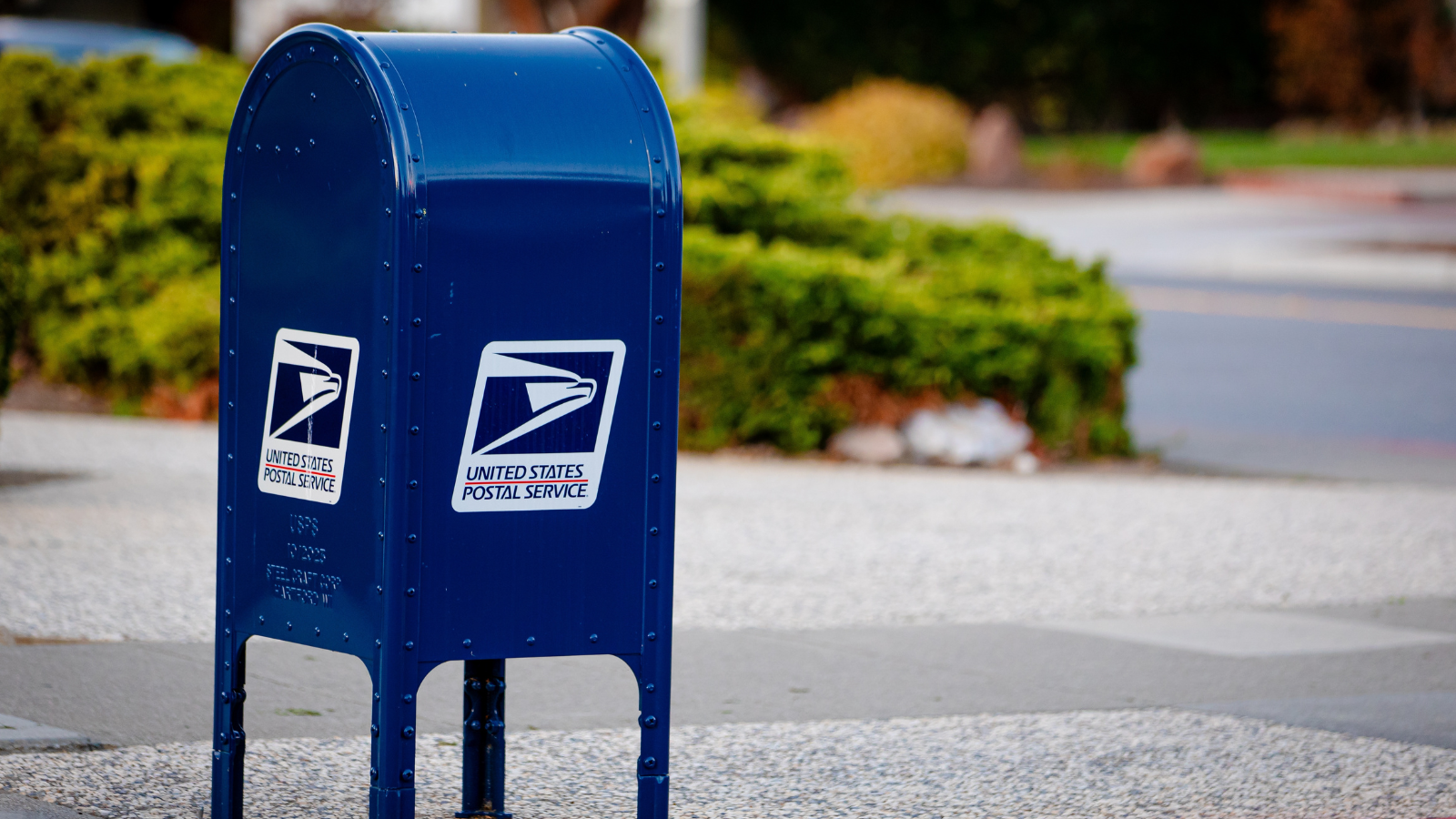
The U.S. Postal Service (USPS) has carried America’s mail for 251 years. Today, it plays a quiet but essential role in every election — transporting ballots, registration cards, and absentee applications to and from tens of millions of voters. Its independence from political control is not an accident: Congress deliberately structured the USPS to be insulated from executive interference. Understanding what the USPS does — and does not do — in elections, and how it is governed, matters for every American who votes by mail. It also matters right now: a proposed 2026 federal rule would push the USPS well beyond this traditional role, and it is currently the subject of active litigation.
What role does the USPS play in elections?
Processing and transport: In the weeks leading up to an election, the USPS implements “extraordinary measures” — including special pickups and expedited handling — to facilitate the processing and delivery of ballots as quickly as possible. The 2026-2027 Official Election Mail Guide (known as Kit 600) directs election officials to use First-Class Mail for all outbound ballots for the fastest service and highest visibility. Officials are encouraged to use serialized Intelligent Mail barcodes (IMb) on every piece, enabling near-real-time tracking of individual ballots through the postal network.
Security: All election mail is protected under federal law. The U.S. Postal Inspection Service (USPIS) — the law enforcement arm of the USPS — monitors election materials to prevent theft, tampering, and fraud. Green Tag 191, affixed to all trays and sacks containing ballots, signals to postal workers that the contents require priority handling.
Postmarking: Many states use postmarks to determine whether a ballot was cast by the legal deadline, though the USPS recently clarified that postmarks were never intended to represent a record or proof of the date on which a piece of mail was posted. The USPS has a policy of attempting to postmark every return ballot envelope; however, importantly, regional consolidation means mail may not always receive a postmark on the same day it is collected — which is why voters who need a date-specific postmark should request one in person at a USPS retail counter. They should also make a plan to send their ballot back with plenty of time, ideally at least one week before Election Day or the day it is required to be received by their election office if that date falls after Election Day.
What does the USPS NOT do in elections?
The USPS has no authority over the legal or administrative side of elections. Its role is strictly operational. The USPS does not:
- Set election deadlines. The dates by which ballots must be requested or returned are set by state law, not the Postal Service.
- Count or verify ballots. The tabulation and verification of votes is the sole responsibility of state and local election officials.
- Determine voter eligibility. The USPS has no role in maintaining voter rolls or adjudicating who is eligible to vote.
- Design ballots. The USPS provides technical advice to ensure envelopes are compatible with high-speed sorting equipment and to suggest best practices, but ballot design is the responsibility of election officials.
How does the USPS support election officials?
The USPS works year-round with state and local election administrators through a set of tools and services designed to prioritize, track, and deliver ballots securely.
Mailpiece design: Specialized postal employees called Mailpiece Design Analysts (MDAs) help election officials design envelopes that are compatible with automated sorting equipment. Kit 600 recommends that all envelope designs be submitted for annual review — even previously approved designs — to ensure they meet current processing standards.
The Official Election Mail Logo: The USPS provides a distinctive logo to authorized election offices. The logo helps postal workers identify and prioritize election materials and helps voters distinguish official mail from political advertising.
Tracking: Kit 600 recommends a “layered” approach to ballot visibility. Serialized Intelligent Mail barcodes (IMb) allow election officials to track individual ballots in near-real time. Specific three-digit Service Type Identifiers (STIDs) — such as 715 and 720 — alert USPS systems to treat a mailpiece as a ballot and provide enhanced tracking data.
Military and overseas voters: For voters covered by the Uniformed and Overseas Citizens Absentee Voting Act (UOCAVA), the law requires that ballots be sent at least 45 days before the election and the USPS further specifies that military mail be segregated into specific bundles for the Chicago and Miami International Service Centers.
What should voters know?
The USPS offers practical guidance so that ballots are received on time:
- Request early. If your state requires you to request an absentee ballot, do so as early as possible, keeping in mind “two-way” mail time — the time it takes a ballot to reach you and the time it takes for your completed ballot to be returned.
- Know your local rules. Every state has different deadlines and requirements. Check with your local election office for specifics.
- Return early. The USPS recommends mailing completed ballots at least one week before your state’s deadline to account for delivery times.
- Request a manual postmark if needed. If your state requires a postmark to match a specific mailing date, ask for a manual postmark at a USPS retail counter — do not rely on a blue collection box.
- Carefully follow all instructions for mail ballots, including return envelopes. These rules are set by state and local officials, not USPS, but can be critical requirements to ensure the ballot is counted.
A current test: the 2026 proposed rule
In March 2026, an executive order directed the USPS to take on a new and unprecedented role in elections — conditioning the delivery of mail ballots on states first sharing their voter lists with the federal government. In response, the USPS issued a proposed rule on June 2, 2026 that would require election officials to pre-submit lists of voters receiving mail ballots through a new federal portal at the Postal Service and to meet detailed new envelope and barcode mandates.
The proposal marks a sharp departure from the operational, neutral role described above. Rather than accepting and delivering ballots prepared by election officials, the USPS would insert itself into decisions about which ballots may be sent — a function it has no authority, expertise, or infrastructure to perform. Election officials, voting rights groups, postal worker organizations, and election administration experts across the political spectrum have raised serious concerns about the burdens the rule would place on election offices and the risks it poses to voters.
The rule has been challenged in court on multiple fronts, and as of July 2026 its implementation is blocked. Because the legal landscape is evolving, the status of the rule may change. Protect Democracy filed a public comment opposing the rule and continues to track developments.
Read Protect Democracy's public comment on the proposed rule Read Protect Democracy's public comment on the proposed rule
How is the USPS governed?
The USPS is an independent establishment of the executive branch, created by the Postal Reorganization Act of 1970 (P.L. 91-375). Congress deliberately structured the USPS to be insulated from day-to-day political control — a recognition that an institution responsible for carrying the nation’s communications, including its ballots, must be able to operate free from partisan interference. However, it must work within certain operational and legal parameters set by Congress in statute. That principle — independence within a framework set by law, not by any one official — is precisely what is at stake when the Postal Service is asked to take direction on how elections are run.
The Board of Governors: The USPS is governed by an 11-member board of governors that functions, as the USPS itself describes, like “a board of directors of a private corporation.” Nine of those members are governors appointed by the president with the advice and consent of the Senate, serving staggered seven-year terms. No more than five of the nine may belong to the same political party. The governors are required to have relevant expertise and are chosen to represent the public interest generally, and cannot be representatives of special interests.
The postmaster general: The nine governors — not the president — appoint the postmaster general, who serves as the chief executive officer of the USPS. The postmaster general serves at the pleasure of the governors, not the president. The president has no direct authority to remove the postmaster general. Before the Postal Reorganization Act, the postmaster general was a presidentially appointed, Senate-confirmed cabinet member — directly subject to presidential control. Congress ended that arrangement in 1970.
The role of the president: Because the USPS is an independent establishment of the executive branch, and because the nine governors are presidentially appointed, there is a limited pathway for executive influence: A president who fills vacancies on the Board can eventually shape its composition. But that influence is constrained by staggered terms, the bipartisan composition requirement, and the statutory structure that places management of the Postal Service in the hands of the board, not the White House. The president does not direct postal operations, cannot set postal rates, and cannot remove the postmaster general.
Why does this independence matter? The Founders recognized the importance of a reliable, independent postal system — Benjamin Franklin served as the first postmaster general of the United States, appointed by the Continental Congress in 1775. The USPS is one of only a handful of institutions explicitly authorized in the Constitution: Article I, Section 8 grants Congress the power “to establish Post Offices and post roads.” For 251 years, the postal system has carried the communications of American civic life — including the ballots that determine who holds power. That mission requires an institution that serves all Americans, regardless of who is in office.
Role of Congress: In addition to the statute structuring the USPS to promote its independence, Congress has established other operating rules for the postal service. For instance, USPS is largely required to be financially self-supporting and there are statutory rules regarding how it operates.
About the Authors


Related Content
-
Can federal law enforcement or troops be deployed to the polls?
- Protecting Elections
- Research & Analysis
- Explainer
-
Noncitizen voting lies, explained
- Protecting Elections
- Research & Analysis
- Explainer
-
Why emergency powers don’t allow presidents to interfere with elections
- Stopping the Consolidation of Power
- Research & Analysis
- Explainer
-
The SAVE tool, explained
- Protecting Elections
- Research & Analysis
- Explainer
Join Us.
Building a stronger, more resilient democracy is possible, but we can’t do it alone. Become part of the fight today.
Donate
Sign Up for Updates Sign Up for Updates
Explore Careers Explore Careers
How to Protect Democracy How to Protect Democracy