Emily Rodriguez is the strategic communications lead on elections for Protect Democracy, specializing in election security and litigation, as well as state-level strategic plans.
How does Congress seat election winners?
- September 29, 2026
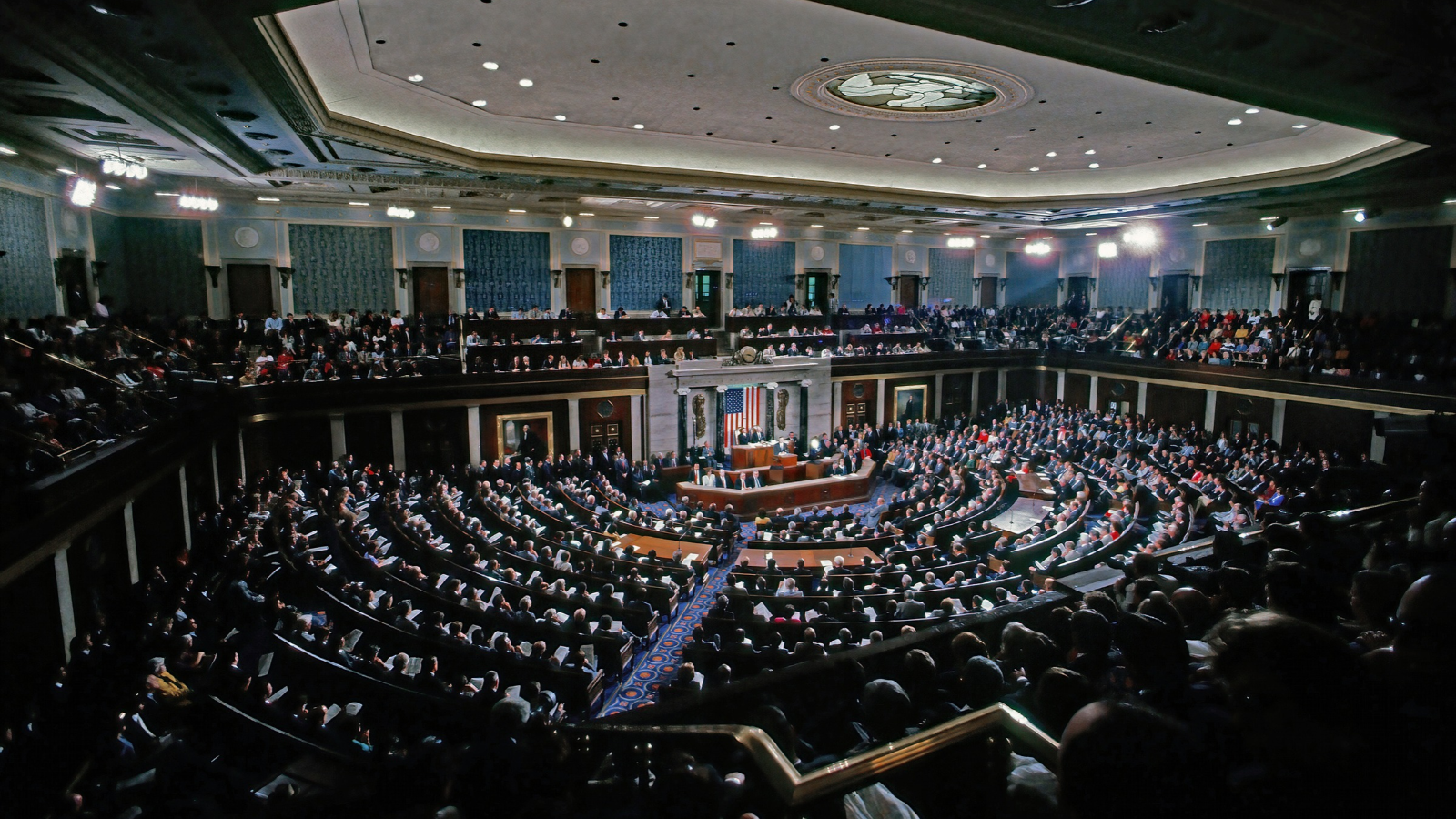
Every two years, the winners of congressional elections are sworn into office in a process so routine it rarely makes news. This year should be no different — the process has not changed. But the reality that these midterm elections are so fiercely contested, combined with the chance that the election results could be very close, has led some to worry that the ordinarily routine step of seating members could become a target for attempts to rig control of the House or Senate.
The risk should be taken seriously, but it would be an extraordinary and lawless departure and should be kept in perspective: Voters choose the rightful winners of congressional elections; those winners are entitled to their seats; and the system is built — through law, precedent, the courts, and democratic accountability — to make sure they get them.
What happens on January 3?
The Constitution provides that, at noon on January 3 in odd-numbered years, the terms of all House members and of one-third of senators end – and the terms of their successors begin. This moment is commonly referred to as “when a new Congress begins.” On January 3, 2027, the 119th Congress will end, and the 120th will begin.
In the House, the sequence is precise: At noon on January 3, 2027, under the Twentieth Amendment, the terms of every current House member will end. Even sitting members who were just re-elected briefly become simply “members-elect” again. This matters because the House, unlike the Senate, is not a continuing body: where the Senate rolls over intact each cycle with only a third of its seats up for election, the entire House must rebuild itself from scratch every two years. Everything that follows in the House flows from that fact.
At noon, the clerk of the House gavels in the new House, establishes a quorum, and oversees its first task: electing a speaker. The members-elect vote to elect a speaker, and no one is sworn in until a speaker is chosen — a step that usually takes minutes, though in January 2023 it took several days. Once elected, the speaker is sworn in and then administers the oath of office to all the members-elect at once. The list of who votes for speaker and is then sworn in comes from the certificates of election the states have issued, each signed by whichever official state law designates — usually a governor or secretary of state. With the oath, the new Congress is seated.
Could the current Congress refuse to seat winners in the next Congress?
No, and this is a common misunderstanding.
The House that judges who is entitled to a seat is the new one that convenes on January 3, not the outgoing (lame-duck) one. When the current House’s terms end at noon, the old House — its speaker, its majority, its committees, its rules — ceases to exist. The current House can hold hearings or pass resolutions before it concludes, but nothing it does binds how the new House organizes itself. The new House starts fresh and judges every seat for itself.
This is what commentators miss when they warn that a “lame-duck” House majority could refuse to seat incoming members. By the time the new Congress meets, the old one is gone. There is no “House” left to do the refusing.
What are potential vulnerabilities — and what stops them?
Setting that misunderstanding aside, there are three key pressure points in the process:
- A state official could try to illegally withhold or falsify certification of results. Whoever a state designates to certify election winners has a ministerial duty — the job is to certify what the vote count shows, not to decide whether they like the result. Certification has drawn pressure in recent years, but no refusal to certify has ultimately succeeded: every time, courts and officials have stepped in to compel it.
- A rogue House clerk could try to leave rightful winners off the roll. Because the clerk assembles the initial list of members-elect, some worry that the current professional clerk could be fired and replaced by a bad-faith actor who might try to rig the provisional roll. But the law that assigns that job, 2 U.S.C. § 26, also limits it: the clerk (or acting clerk) must place on the roll those “whose credentials show that they were regularly elected” — and only those. Because the clerk is not a member of Congress and has a clear statutory duty to include certified winners on the provisional roll, courts could order the roll corrected. Any abuse of the clerk’s duty to prepare the provisional roll could also be corrected by a majority of the House itself. And, of course, such a brazen attempt to seize control of the House through procedural chicanery would be obvious to the public, which would not stand for it
- A member-elect could object to another’s swearing-in. By tradition, any member-elect may object to the swearing in and seating of another, and a Speaker could ask the challenged member not to participate in the oath of office. But this has a well-worn answer, demonstrated recently. On January 3, 2021, one member objected to seating the members-elect of six entire states; another member immediately offered a resolution directing that everyone be sworn in. It passed 371-2 — and the challenged members were permitted to vote on it. A simple majority is all it takes to clear an objection and seat the rightful winners. Even absent such a simple majority, bad-faith objections to swearing in by one party would, in practice, likely draw retaliatory objections from the other party to deter or cancel out any impact.
Each of these scenarios would require a specific actor to take an extraordinary, unprecedented step — and each step meets a wall, whether a court, a statute, a floor vote, or the public.
What is the history on House seating?
Seating battles arose repeatedly during the 19th century, but have been relatively rare in the modern era and are resolved under more established rules and laws. The House clerk has a statutory duty to put certified election winners on the roll, and the Federal Contested Elections Act sets up rules to govern most ongoing disputes over House seats.
Two races from the 2020 election cycle show how even highly disputed elections can be resolved. When New York’s 22nd District wasn’t settled in time for the opening day of the 2021 House session, the seat simply stayed vacant until the state finished counting; the certified winner was sworn in weeks later. In a second, extremely close race in Iowa’s 2nd District, the certified winner was sworn in provisionally while the ongoing dispute was referred to the House Administration Committee (the other candidate eventually withdrew her challenge).
The last time the House refused to seat a candidate holding a valid certificate was 1985. That was the (highly controversial) work of a majority freezing out a member of the minority, not a minority somehow seizing control of power. As it demonstrates, a majority that already controls the chamber can play hardball with a minority member, but a minority has never been able to maneuver itself into a majority by picking off the other side’s winners — because every move it would need runs through a floor vote the majority already controls.
What about the Senate?
The Senate has occasionally seen sharply contested races and could do so again this year, particularly with control of the chamber possibly at stake. But genuinely disputed outcomes are uncommon: statewide margins are usually large enough in absolute terms that the true winner isn’t in serious doubt, even when the race is close. Moreover, the Senate is less exposed than the House for a structural reason: it is a continuing body. Only a third of its seats are up each cycle, so there is no wholesale reorganization and the senators with ongoing terms retain a voice under ongoing rules. Senators of both parties will have a powerful voice when the new session is called to order on opening day. A senator-elect is seated based on a certificate signed by the governor and secretary of state (2 U.S.C. §§ 1a, 1b); the oath of office is administered to each Senator-elect by the president of the Senate (2 U.S.C. §21). In 2027, this will most likely be Vice President Vance, acting as president of the Senate, but could also be the president pro tempore (currently Senator Grassley of Iowa). A senator whose election is contested is typically seated while the Senate’s Rules Committee reviews the dispute.
The bottom line
The process by which the candidates elected by voters take their seats in Congress on January 3, 2027 is safeguarded — by the ministerial duty to certify, by the statute governing the roll, by the courts, and perhaps most of all, by the American people who would not allow their votes to be overturned in Congress by desperate and brazen abuses of power. The volume of alarm around January 3 should not outrun the actual risk. The process is robust, the guardrails are real, and the winners of the 2026 elections are entitled to take their seats — and the voice of the voters will be heard.
About the Authors


Related Content
-

Can federal law enforcement or troops be deployed to the polls?
- Protecting Elections
- Research & Analysis
- Explainer
-
Noncitizen voting lies, explained
- Protecting Elections
- Research & Analysis
- Explainer
-
Why emergency powers don’t allow presidents to interfere with elections
- Stopping the Consolidation of Power
- Research & Analysis
- Explainer
-
The SAVE tool, explained
- Protecting Elections
- Research & Analysis
- Explainer
Join Us.
Building a stronger, more resilient democracy is possible, but we can’t do it alone. Become part of the fight today.
Donate
Sign Up for Updates Sign Up for Updates
Explore Careers Explore Careers
How to Protect Democracy How to Protect Democracy