Justin Florence co-founded Protect Democracy and helps lead the organization’s work to advance its mission, including legal, policy, advocacy and communications strategies.
How disgorgement could address President Trump’s corruption
- September 25, 2026
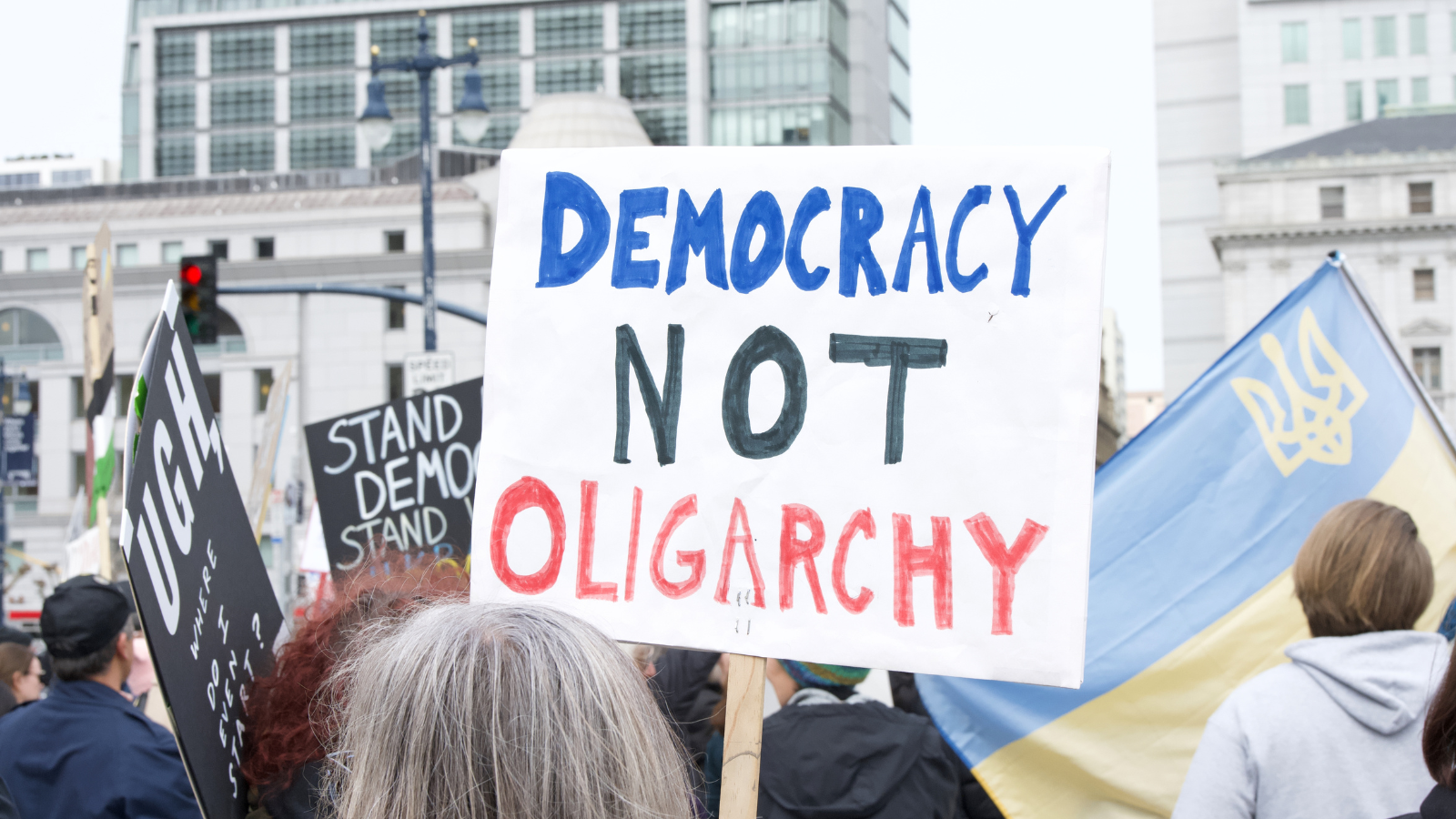
President Trump has engaged in an unprecedented level of corruption during his second term in office. This level of corruption has come at a time when legal avenues for accountability feel limited.
In Trump v. United States, the Roberts Court declared that the president himself is immune from prosecution for any actions he took as part of his “official duties.” And we can expect, given the president’s history with the pardon power, and the reporting on his plans for mass pardons, that he will use that tool to make sure his friends and family are similarly protected.
President Trump's corruption, explained President Trump's corruption, explained
What is disgorgement?
There is another tool, though, that could offer accountability for the president’s corruption. The legal principle of disgorgement is simple, common sense, and well-settled in American law: You don’t get to keep what you stole.
So, for example, the Securities and Exchange Commission’s disgorgement authority lets the government recover the money that fraudsters make through securities fraud. Securities fraud can take a number of forms — it might involve buying or selling securities based on information not available to the public, or pump and dump schemes designed to inflate the price of something only to sell it off. Using disgorgement, the SEC can take back those ill-gotten gains, and give that money to the American people.
That is one of many different laws that allow federal enforcement agencies (and in some cases individuals) to claw back for the taxpayer the ill-gotten gains from corruption. Other examples include:
- Conflict of Interest Statutes, 18 U.S.C. §§ 209 and 216. Section 209 prohibits executive branch employees from receiving any salary or supplementation of salary from a private source as compensation for their government service, while section 216 supplies the enforcement mechanism, authorizing both criminal prosecution and civil actions, including suits to require the disgorgement of the value of anything received in violation of the conflict-of-interest provisions.
- The False Claims Act (FCA), 31 U.S.C. § 3729, dating back to President Lincoln’s efforts to stop fraud against the Union Army, is designed for the government to recover money from people or companies who defrauded it. This includes recovery for bribes, kickbacks, bid-rigging, and related types of fraud around government grants and contracts.
- The Foreign Corrupt Practices Act (FCPA), 15 U.S.C. § 78dd-1, provides for disgorgement in international contexts — allowing the U.S. government to claw back profits from U.S. business activities involving bribery or other corrupt influence over foreign officials. Congress expanded it in 2024 with the Foreign Extortion Prevent Act. To be sure, this would only capture bribes or corruption given to foreign officials or attempts to extort them.
- Civil Asset Forfeiture, 18 U.S.C. § 981. Civil forfeiture allows us to sue the property (cash, real estate, or stock) directly. The government only needs to prove by a preponderance of the evidence that the property is “traceable to” a violation of a broad set of federal laws (such as wire fraud or bribery). This is particularly effective for “relief defendants” — family members or shell companies that received money but did not personally participate in the corruption. This has been subject to abuse in some situations, and it’s critical it be used with fair process.
- Voiding and Recovering a Contract, 18 U.S.C. § 218. This statute provides the president and agency heads with the unilateral power to void and rescind any contract, grant, or license tainted by bribery or a conflict of interest. It does, however, require an underlying criminal conviction. Unlike most statutes that require a court order, § 218 allows the executive to declare a transaction void from the beginning. Once a contract is voided, the government can sue to recover all funds paid out.
These tools can deter and drive accountability for the president’s corruption
As has been well-documented, the president has gotten extremely wealthy during his time in the White House. Untangling every vector of potential corruption, both from President Trump and from those around him, could take months. We already know, for example, that Trump has made thousands of stock trades during his time in the White House, and has mingled his regulatory power over the cryptocurrency industry with his own private interests.
Regardless of the exact vectors of corruption uncovered, there are clear next steps to be taken. Ultimately, federal enforcement agencies like the DOJ and SEC should pursue an overarching and sustained effort to recover for taxpayers and victims the billions of dollars that have been pilfered from the American people. In the meantime, Congress can take action to:
- Subpoena financial records and communications from private parties who are counterparties to corruption — including those suspected of engaging in bribery, extortion, or corrupt insider deals
- Hold targeted hearings on specific deals
- Pass legislation to ensure that federal money can’t be doled out through corrupt slush funds
- Replicate what House members sought to do with the Epstein files to demand transparency on a range of information held by the federal government.
- Punch up federal disgorgement laws, which are already strong
Private litigants can also file suits immediately. The False Claims Act is an obvious tool, as any person with nonpublic knowledge of fraud against the federal government is encouraged to file a lawsuit on the government’s behalf. Civil claims under anti-corruption laws such as RICO, which allow private plaintiffs to recover extensive damages, don’t require any government cooperation. State Attorneys General also have tools to address federal corruption in their jurisdictions.
Accountability is still possible
The efforts to hold Trump and those around him accountable in the aftermath of 2020 was a failure. This work, though, could produce real results and earn popular support. Hungary offers a telling example. In the middle of 2026, voters in Hungary achieved a massive victory for liberal democracy by throwing out their authoritarian prime minister, and MAGA ally, Viktor Orbán. But reformers there knew that voting Orbán and his cronies out was a necessary, but not sufficient step if corrupt officials still get to retire on their stolen goods.
Hungary’s reformers implemented an anti-corruption playbook. Specifically, they have established a National Asset Recovery and Asset Protection Office, bringing together police, financial investigators, and civil litigators with a single mission: clawing back stolen taxpayer dollars.
The ill-gotten gains of this administration belong to the American people, and disgorgement is a legal remedy that cannot be touched by pardons, or by the Roberts Court. Those seeking payouts from the new Trump fund should not expect to keep that money if their claims cover up evidence of crimes. Crypto profits, deals with foreign governments, coerced corporate donations, prediction market winnings — all of these could and should be seized and returned to the American people. It’s time to get the money back.
About the Authors



Related Content
-

Can federal law enforcement or troops be deployed to the polls?
- Protecting Elections
- Research & Analysis
- Explainer
-

Noncitizen voting lies, explained
- Protecting Elections
- Research & Analysis
- Explainer
-
Why emergency powers don’t allow presidents to interfere with elections
- Stopping the Consolidation of Power
- Research & Analysis
- Explainer
-
The SAVE tool, explained
- Protecting Elections
- Research & Analysis
- Explainer
Join Us.
Building a stronger, more resilient democracy is possible, but we can’t do it alone. Become part of the fight today.
Donate
Sign Up for Updates Sign Up for Updates
Explore Careers Explore Careers
How to Protect Democracy How to Protect Democracy