Cyrena Kokolis is an policy specialist at Protect Democracy, where she conducts electoral reform advocacy and supports the organization's civic engagement programming.
To break two-party gridlock, democratize Congress
- September 25, 2025
How American politics could work better if our two major parties embrace their internal divisions
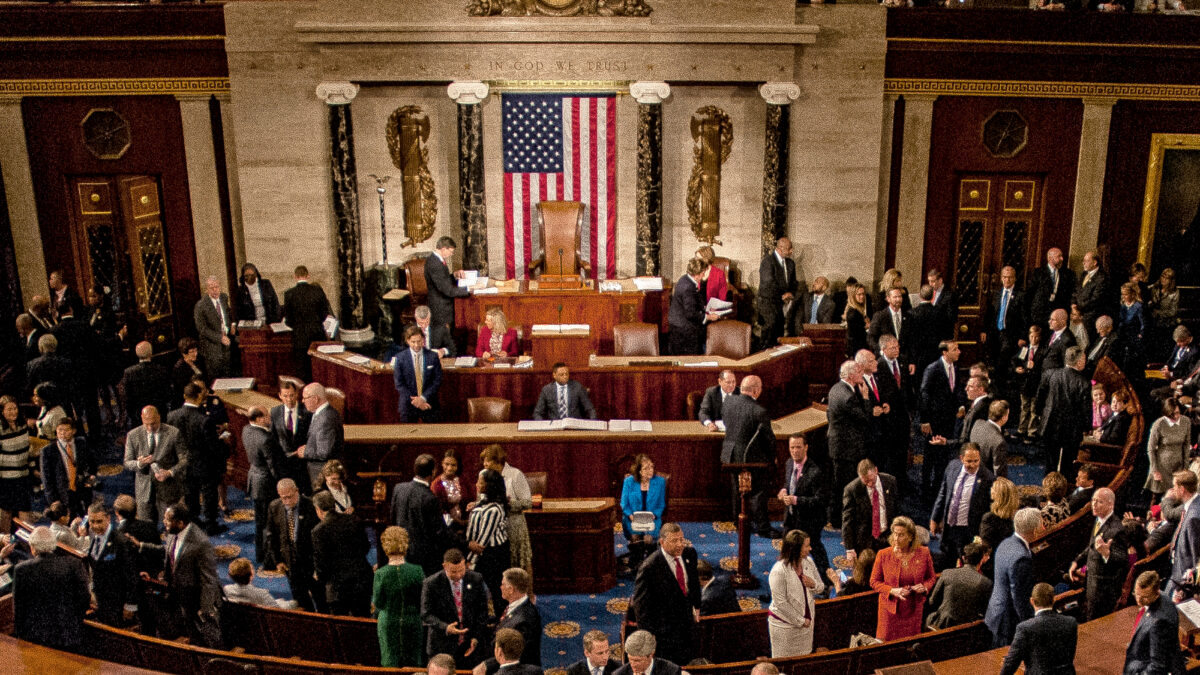
If we want to fix American democracy, we need to recognize that there are more than two kinds of voters, and more than two kinds of representatives.
American politics has become an endless tug-of-war. In our two-party system, every debate tends to be shaped into a two-sided, zero-sum conflict; every success by one party is viewed as a loss by the other. In Congress, the two parties repeatedly fight to a stalemate, only occasionally eking out significant legislative wins. And the longer this gridlock continues, the more mutual animosity grows, and the more each side feels that they must defeat the other at all costs. This angry, all-or-nothing view of politics has gradually seeped out into the public and now seems at risk of tearing the country — and the constitution — apart.
Read our full report: Democratize Congress
We need a near-term strategy to restore some functionality to Congress and to strengthen our democratic system.
One such strategy is to help to empower and distinguish the groups that already exist within our two major political parties — groups referred to in this report as “sub-parties.” In the House of Representatives, for example, there are already Progressive Democrats, Blue Dog Democrats, Freedom Caucus Republicans, the Republican Governance Group, and others. They just aren’t very visible to the American people, and they are constrained by rules designed to reduce every debate to a two-party conflict. If we stop limiting every issue to only two sides, and allow these sub-parties some latitude to pursue their distinct visions in Congress, we just might be able to encourage dynamic, collaborative policymaking — and start shifting away from our increasingly dangerous tug-of-war politics.
Key Takeaways
- Our two major political parties are locked in an escalating, zero-sum conflict that is tearing the country apart and preventing Congress from doing its job.
- We can significantly change this dynamic by taking a relatively modest step: empowering “sub-parties”—distinct groups within the existing parties in Congress—principally by amending congressional rules to give these groups additional resources and greater access to the legislative agenda.
- Empowering sub-parties would help break up two-party gridlock in Congress, and give members of Congress a new incentive and opportunity to start working with each other and getting things done.
- These changes could also help spur additional positive reform, including reforms to our elections that would support a true multi-party system.
Read our full report: Democratize Congress Read our full report: Democratize Congress
About the Authors


Related Content
-
What to expect during the 2026 election season
- Protecting Elections
- Research & Analysis
- Explainer
-

Can federal law enforcement or troops be deployed to the polls?
- Protecting Elections
- Research & Analysis
- Explainer
-
Noncitizen voting lies, explained
- Protecting Elections
- Research & Analysis
- Explainer
-
Why emergency powers don’t allow presidents to interfere with elections
- Stopping the Consolidation of Power
- Research & Analysis
- Explainer
Join Us.
Building a stronger, more resilient democracy is possible, but we can’t do it alone. Become part of the fight today.
Donate
Sign Up for Updates Sign Up for Updates
Explore Careers Explore Careers
How to Protect Democracy How to Protect Democracy