Alexandra Chandler oversees Protect Democracy’s teams that protect free and fair elections and the infrastructure for electoral competition at the national and state levels, as well as national security policy and advocacy.
Foreign interference in American elections, explained
- July 2, 2026
And why it’s different than foreign influence
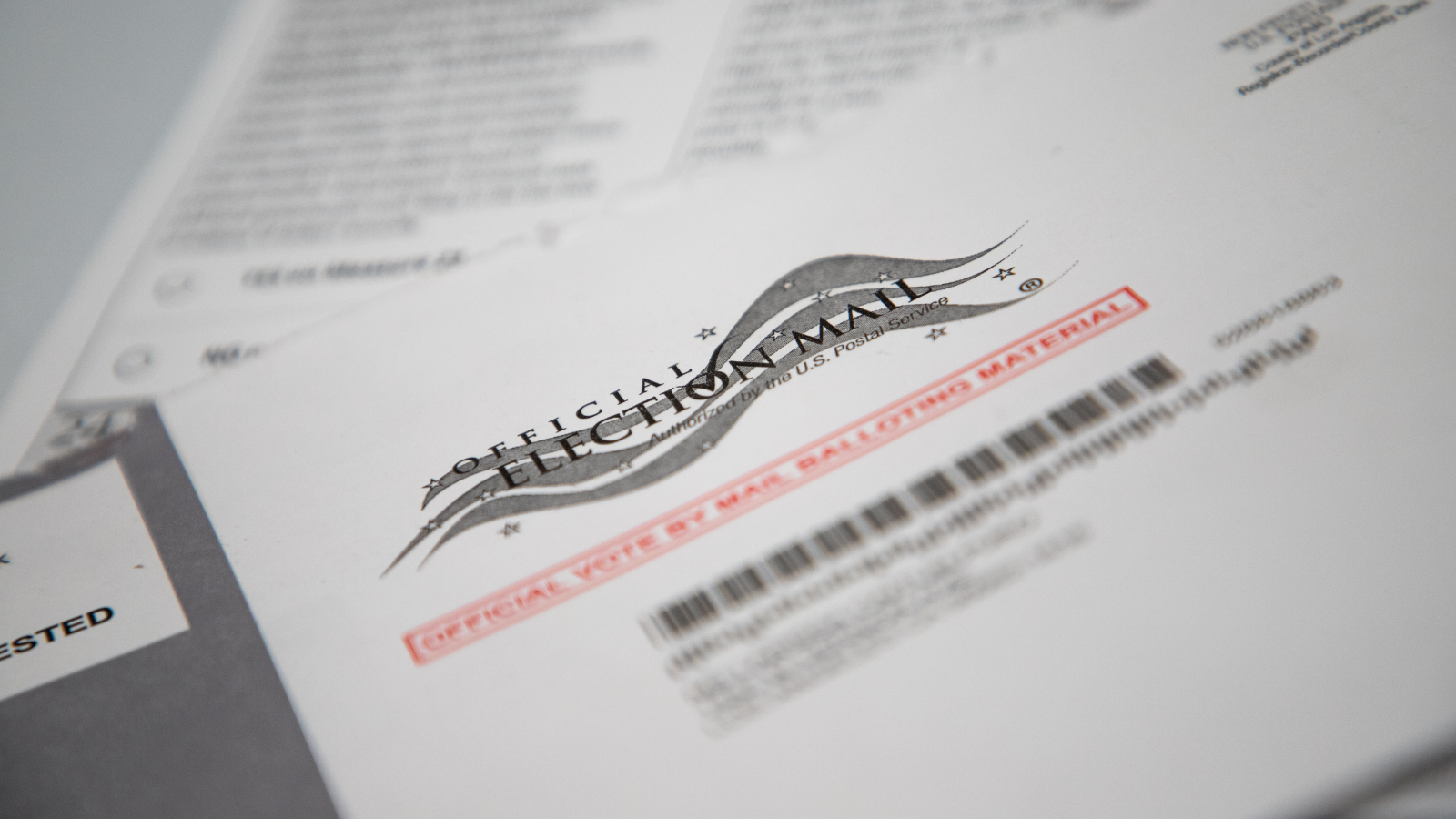
Federal elections in the United States in the 21st century have been safe, secure, and trustworthy. Even in cycles where foreign adversaries targeted American election infrastructure in an attempt to interfere, bipartisan intelligence assessments have consistently concluded that no votes were altered, deleted, or manipulated, and the structural integrity of the vote count remained completely intact. Crucially, interference is distinct from influence campaigns, which have been a part of recent election cycles.
While there has not been foreign interference in recent election cycles, President Trump has continued to sow doubt about the 2020 election, in particular, claiming that interference from a foreign country changed the result and kept him from winning. That’s part of a broader, predictable playbook to deceive the public about federal elections, disrupt the systems that allow elections to run smoothly, and ultimately, to deny results he and the autocratic faction that supports him don’t like.
Claims of foreign interference in past elections are designed to sow doubt about future ones, even if they aren’t credible. Here’s what you actually need to know about foreign interference, foreign influence, and why misinformation about the 2020 election is designed to support future efforts to interfere with elections.
What is the difference between foreign interference and foreign influence?
Foreign interference in a federal election occurs when a foreign government actively works to change the results of an election by interfering with the tabulating or counting of votes, and by keeping election officials and administrators from doing their jobs. This kind of interference is designed to disrupt the outcome by interfering with the operation of election systems.
Foreign influence is designed to change the way people vote or the way politicians behave. The 2016 election was famously subjected to this kind of influence from Russia, which used accounts scattered across social media to heighten partisan divisions and stoke resentment. Notably, there have been foreign influence campaigns that were intended to shape outcomes in favor of both parties in recent federal elections.
Americans should be concerned about both types of election meddling, but President Trump has more recently been focused on claims of direct interference, with a specific focus on the Venezuelan government under former president Nicolas Maduro.
Are American elections vulnerable to foreign interference?
There is no evidence that foreign governments have successfully interfered in recent federal elections, and this would be a difficult task for any government. That’s because of the security of the American electoral system, and because our elections are so decentralized. The federal government does not directly oversee elections. Instead, the Constitution gives the responsibility for deciding the “time, place, and manner” of elections to each state, which means that elections are run differently from state to state, and election rules are often even more localized than that.
As a result, foreign interference would require both a deep understanding of how elections operate across various states, and a coordinated effort to interfere with the running of elections across each of those states.
Decentralization is only part of the reason U.S. elections are so reliably secure. Elections are subject to robust monitoring programs designed to catch any potential interference, and because the systems are not national, any interference can quickly be localized and contained.
How to respond to claims of foreign interference
While election security experts are always concerned about the threat of foreign interference, the more acute threat to the 2026 midterms is coming from the federal government itself. That’s why it’s crucial to treat claims that come from this administration with skepticism and a clear-eyed understanding of how they will likely use any such claims.
This administration, which has control over much of the intelligence gathered over the past decade, could very well work to politicize that intelligence with the goal of undermining confidence in the 2020 election, or any other previous election for that matter. In doing so, they would not just be re-litigating a concluded, verified election that is now part of American history, they would be attempting to undermine faith in future elections. If 2020 was “stolen,”, 2026 could be too.
That strategy is not going to work. American elections are safe, secure, and the outcomes are free from foreign interference. Any claims to the contrary, especially coming from this White House, are much more likely to be designed to undermine the credibility of past and future elections than they are to be legitimate.
Guiding questions
When evaluating dramatic new claims of past foreign election interference for political motivations, these questions must be asked:
Is the source credible? Is the claim coming from a coerced plea deal, an authoritarian state actor, or an unverified partisan leak?
Is any intelligence reporting consensus-backed? Does the claim represent the unified assessment of intelligence community agencies, backed by career intelligence professionals and analytic rigor, or is it a selective, politicized release of intelligence from political appointees?
What is the domestic trigger? Is this claim being used to justify executive overreach into the power of local and state officials to run their elections, or supposedly other “necessary” legislative or emergency actions?
About the Authors



Related Content
-

Can federal law enforcement or troops be deployed to the polls?
- Protecting Elections
- Research & Analysis
- Explainer
-
Noncitizen voting lies, explained
- Protecting Elections
- Research & Analysis
- Explainer
-
Why emergency powers don’t allow presidents to interfere with elections
- Stopping the Consolidation of Power
- Research & Analysis
- Explainer
-
The SAVE tool, explained
- Protecting Elections
- Research & Analysis
- Explainer
Join Us.
Building a stronger, more resilient democracy is possible, but we can’t do it alone. Become part of the fight today.
Donate
Sign Up for Updates Sign Up for Updates
Explore Careers Explore Careers
How to Protect Democracy How to Protect Democracy