How to spot (and push back against) federal voter intimidation
- June 18, 2026
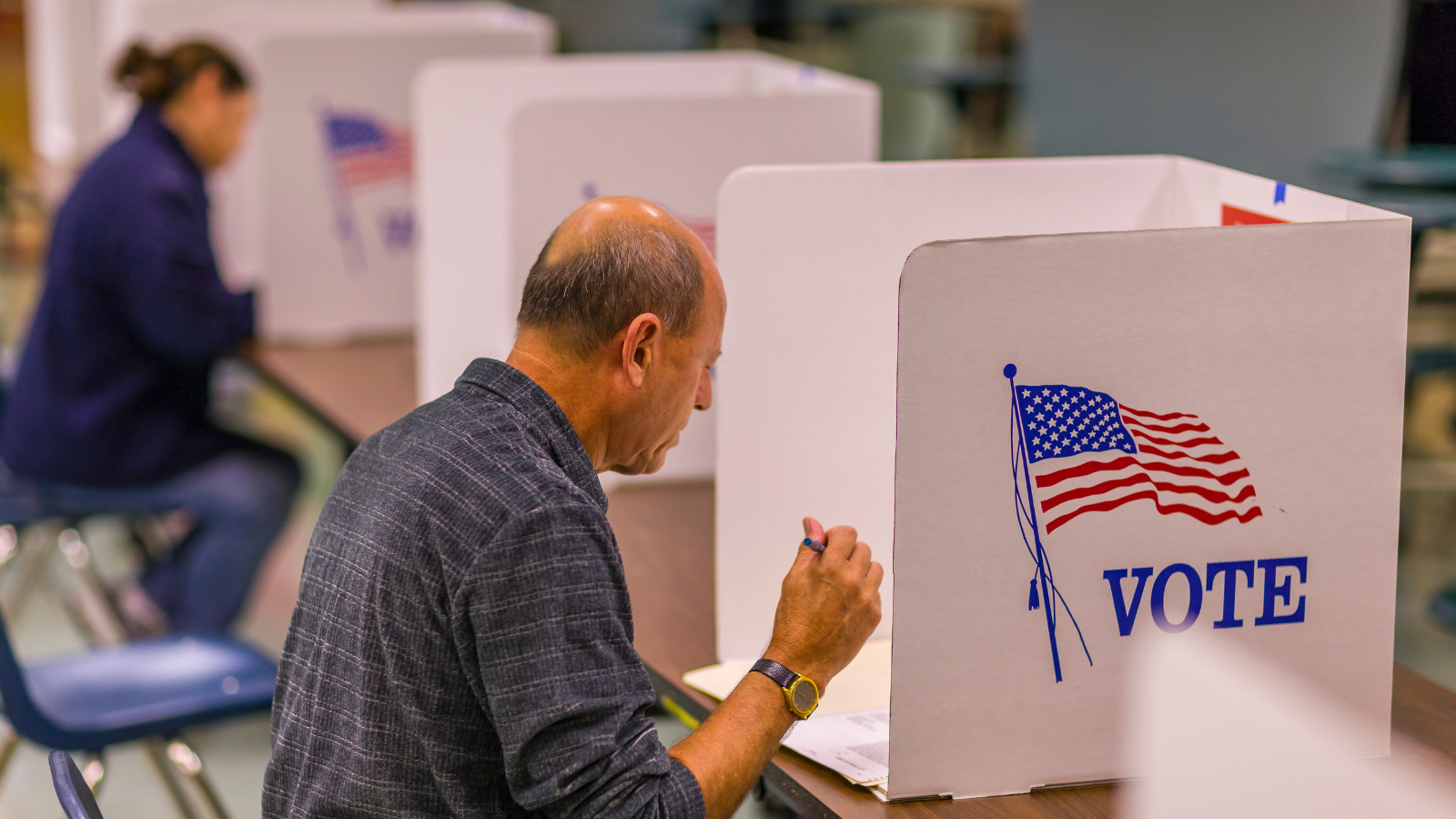
Election interference has, in recent history, been mostly associated with foreign actors. There were concerns about the role Russia played in the 2016 election, and much of America’s election infrastructure is built to ward off threats from foreign adversaries that might undermine this crucial lever of American democracy.
As the 2026 midterm elections approach, though, communities around the country are preparing for a different kind of election interference. In this cycle, election interference from the United States government could be an even greater threat than those poised by any foreign power.
Read our action guide, made in partnership with Over Zero: Community Resilience in the 2026 elections Read our action guide, made in partnership with Over Zero: Community Resilience in the 2026 elections
Read the guide in Spanish Read the guide in Spanish
What could federal voter intimidation look like?
The interference could take several forms:
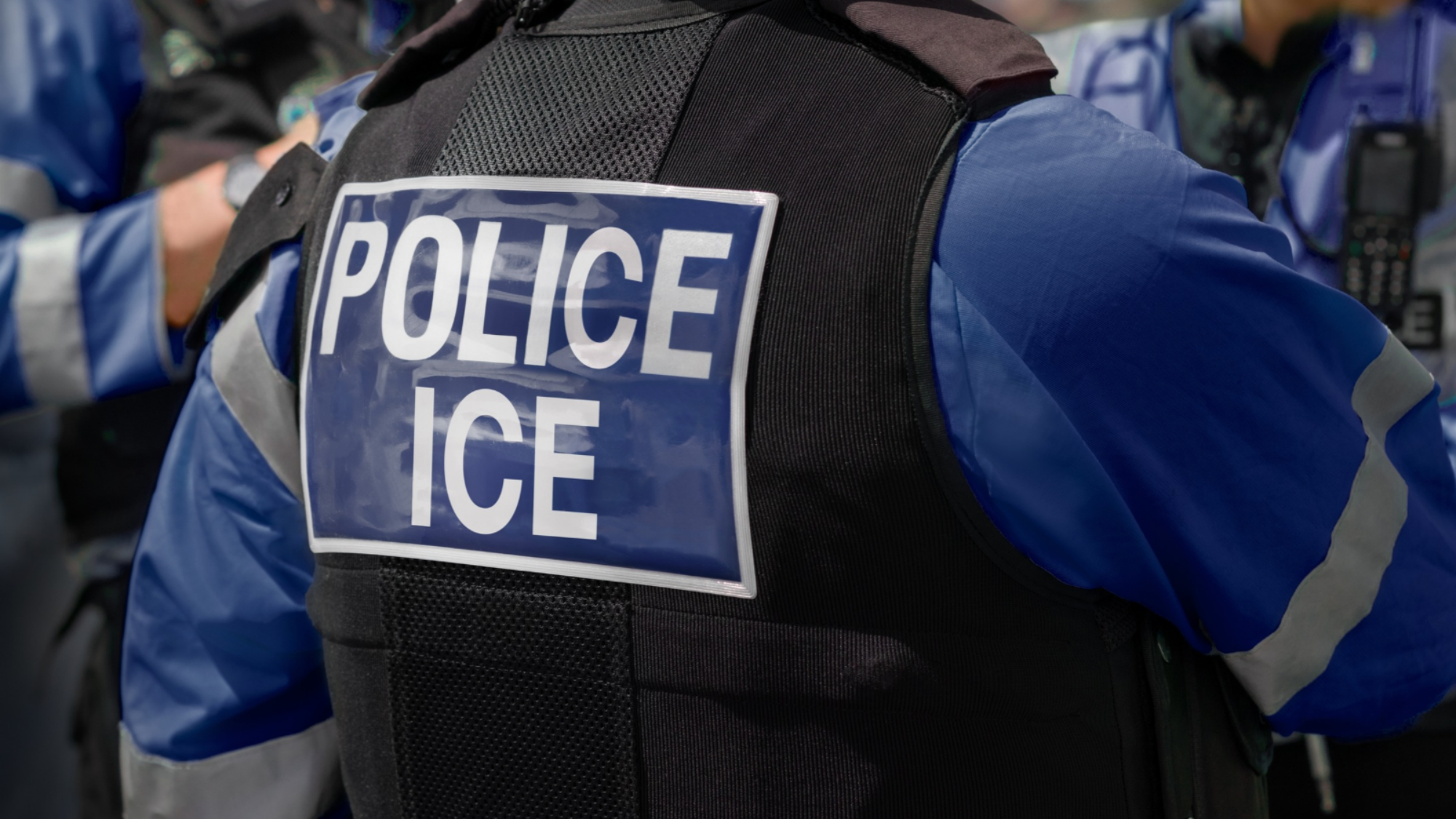
- Increased presence and visibility of Immigration and Customs Enforcement (ICE), federal agents or other militarized agents in the leadup to the election, including through unjustifiably invoking the Insurrection Act;
- Local or state law enforcement, particularly in jurisdictions with 287(g) agreements that mandate cooperation with Department of Homeland Security (DHS) agents, stationed at polling sites;
- And least likely, immigration or other militarized federal agents deployed directly to polling sites.
It may only take a single viral incident in one jurisdiction to suppress turnout across the country. And whether or not ICE or other armed federal agents appear near polling locations, the threat alone is enough to chill participation.
These and other forms of federal interference would be a deliberate show of force, designed to intimidate voters, particularly naturalized citizens and communities of color. Alongside the administration’s repeated and baseless lies that “noncitizen voting” threatens election integrity, this creates an environment of fear designed to deter eligible voters from participating in the midterms.
Voter suppression and violence toward targeted groups in our democracy are not new. They are a common thread running through our national story, rooted in slavery and Jim Crow, and spanning disenfranchisement, gerrymandering, intimidation, and outright violence designed to drive targeted communities from public life. The Supreme Court’s recent gutting of the Voting Rights Act in Louisiana vs. Callais and several southern states’ rush to redraw their voting maps in ways that dilute the voting power of communities of color make plain that these are not tactics of the past.
Would this kind of interference be legal?
Over the last year, this administration has used armed federal agents to threaten demonstrators, journalists, and observers by using unlawful force to quash protests against the administration’s actions. Under the guise of immigration enforcement, the administration has surged DHS agents across the country to intimidate neighbors who oppose their actions, including those who exercise their rights to lawfully speak out in dissent or to record the federal agents’ hostilities. The government engaged in violent tactics against protesters in 2020, but the scale and reach of the aggression has intensified.
These tactics have sought to instill fear and to disrupt daily life in the affected cities, particularly in targeted communities. If something similar happens in or near competitive electoral districts this fall, there is little doubt that the administration will be attempting voter intimidation and suppression. It is just as illegal for the administration to use a show of force to interfere in contested election districts as it would be for it to send ICE or other militarized agents directly to polling locations
Using force to make voters fearful to participate in our elections is prohibited voter intimidation, whether it is from federal forces, local law enforcement, or private citizens. Specifically:
- It is illegal to deploy federal “troops or armed men at any place where a[n] … election is held,” unless in the extreme circumstances of war or rebellion. This includes the deployment of federal immigration agents or federalized National Guard in or around election locations.
- It is illegal to coerce or threaten election observers and mobilizers, threaten voters about their qualifications to vote, spread false voting information or eligibility requirements, and to target non-English speakers and voters of color, among other forms of unlawful voter intimidation.
The Insurrection Act puts additional meaningful checks on the threat of domestic deployments. The bar for invoking the Insurrection Act is very high. It requires a genuine crisis, and historically, it has been limited to severe instances of civil unrest and to defend the rights of marginalized groups. Courts can review and curtail an invocation of the Insurrection Act. Critically, the Insurrection Act does not suspend the Constitution, impose martial law, or change how we can defend our constitutional rights and civil liberties.
Federal National Guard deployments are also tightly regulated, and can’t legally be undertaken without appropriate justification and process. For example, the Supreme Court recently ruled that the Trump administration could not federalize National Guard troops during a DHS surge in Chicago and the Court emphasized the legal constraints on mobilized guardsmen conducting law enforcement. It remains within each Governor’s discretion whether they call up their state’s National Guard. Even when troops are legally deployed, they can’t legally interfere in elections. State statutes and constitutions provide additional constraints to protect voters from federal forces.
These efforts are designed to make us feel small and powerless. But they will not succeed when everyday Americans are committed to peacefully participating and showing up for their neighbors. Regardless of who you vote for, how much time you have, or where you stand in your community, there is a role for you in ensuring free and fair midterms: posting on social media; supporting neighbors in developing plans to vote early, vote together, or vote by mail; volunteering as a familiar face at polling locations; learning deescalation tactics; or joining a local election protection coalition will all make a difference.
What you can do about it
Pre-election
- Make plans to go vote with your neighbor, friends, family members and provide support if they are unsure about their voting plans.
- If allowed by your state, vote early or by mail. Find more info at TurboVote.
- Attend a know your rights training from partners like ACLU, and share learnings with friends and family.
- Post positive messages about voting on social media and hang flyers in your neighborhood. The Election Protection Hotline has a great toolkit!
- Host a community dinner and bring up voting plans.
- Join your local Election Observer Programs through trusted partners such as: League of Women Voters and Election Protection Hotline.
- Join your local Peacekeepers program.
- Familiarize yourself with best practices around identifying and countering misinformation and AI-generated content.
- Familiarize yourself with trusted resources on voting information such as through your State Election Board which you can find through the Election Assistance Commission.
- Save the voter protection hotline to your phone. English: 866-OUR-VOTE (866-687-8683). Spanish: 888-VE-Y-VOTA (888-839-8682).
During voting
- Go vote with your friends, family and neighbors! Make it a community event to celebrate the joy of voting.
- Participate in a HALO event, Souls to the Polls, or any other event where your community is voting together.
- Participate as a poll observer or poll worker.
- Use the voter protection hotline if issues arise:
- English: 866-OUR-VOTE (866-687-8683)
- Spanish: 888-VE-Y-VOTA (888-839-8682)
- Utilize your deescalation skills. Check out the Bridging Divides Initiative’s Deescalation Directory for a repository of deescalation resources to support different community members, whether elected government officials, election and poll workers, those engaging with law enforcement, or everyday community members, volunteers, and bystanders.
- Film interactions with federal agents and report to the voter protection hotline, if you are comfortable and it is legally allowed. Use judgment about whether filming or photographing federal agents would escalate a situation and refrain from doing so in those circumstances.
- Consult state laws to determine whether and under what conditions recording devices are permitted at the polls.
- Make sure to follow guidelines and laws for recording near or at polling locations.
- Be aware of potential threats from individuals who use social media and streaming platforms to create content that promotes bigotry and undermines democracy.
For more actions, read our full action guide made in partnership with OverZero For more actions, read our full action guide made in partnership with OverZero
Read the guide in Spanish Read the guide in Spanish
Related Content
-
What to do if you face intimidation at the polls
- Protecting Elections
- Research & Analysis
- Toolkit
-
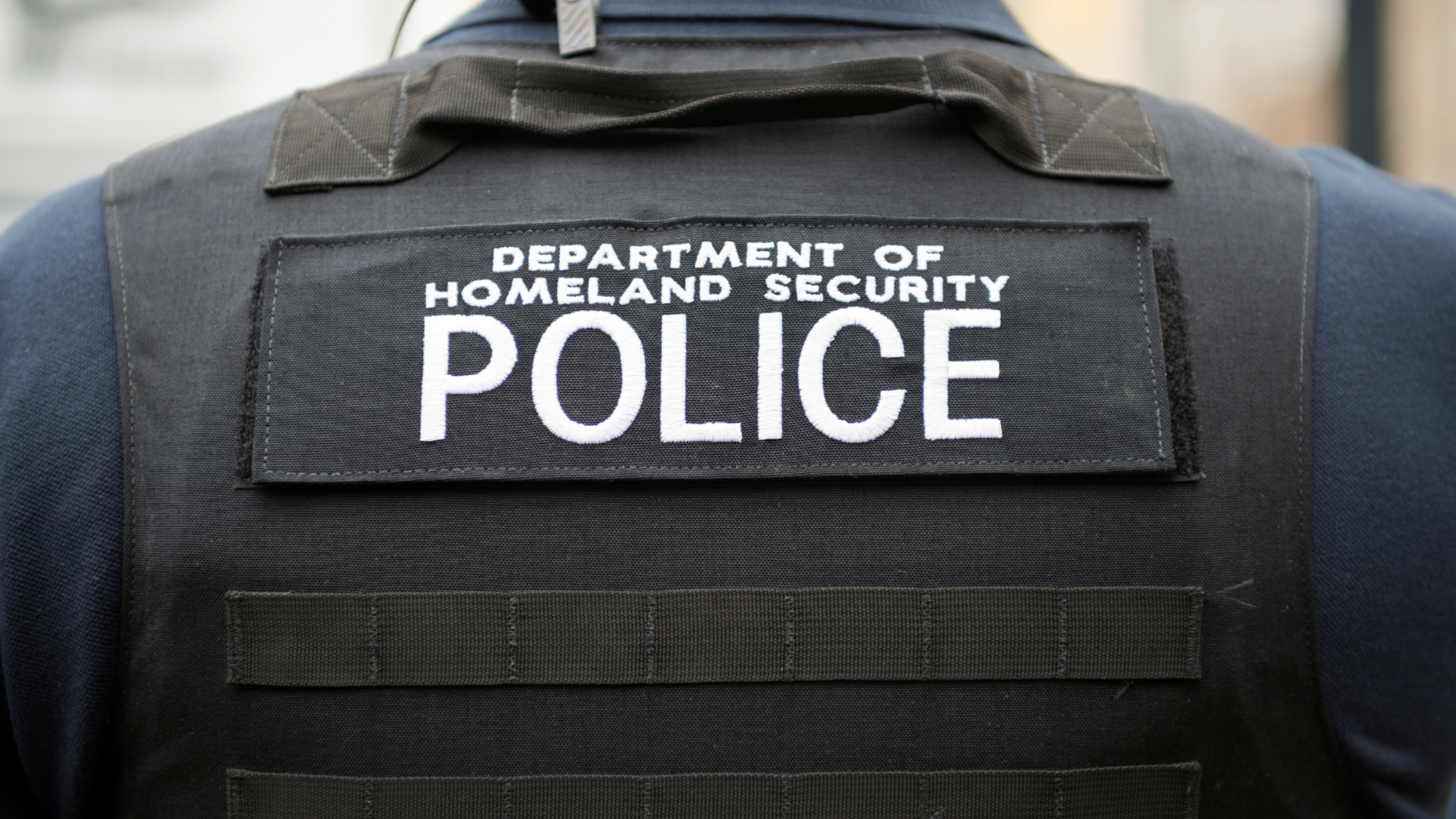
Court limits DHS’s armed home visits questioning voter eligibility
- Protecting Elections
- Litigation
- Statements
-
What to expect during the 2026 election season
- Protecting Elections
- Research & Analysis
- Explainer
-
Can federal law enforcement or troops be deployed to the polls?
- Protecting Elections
- Research & Analysis
- Explainer
Join Us.
Building a stronger, more resilient democracy is possible, but we can’t do it alone. Become part of the fight today.
Donate
Sign Up for Updates Sign Up for Updates
Explore Careers Explore Careers
How to Protect Democracy How to Protect Democracy