The DOJ investigation of Minnesota officials, explained
- January 23, 2026
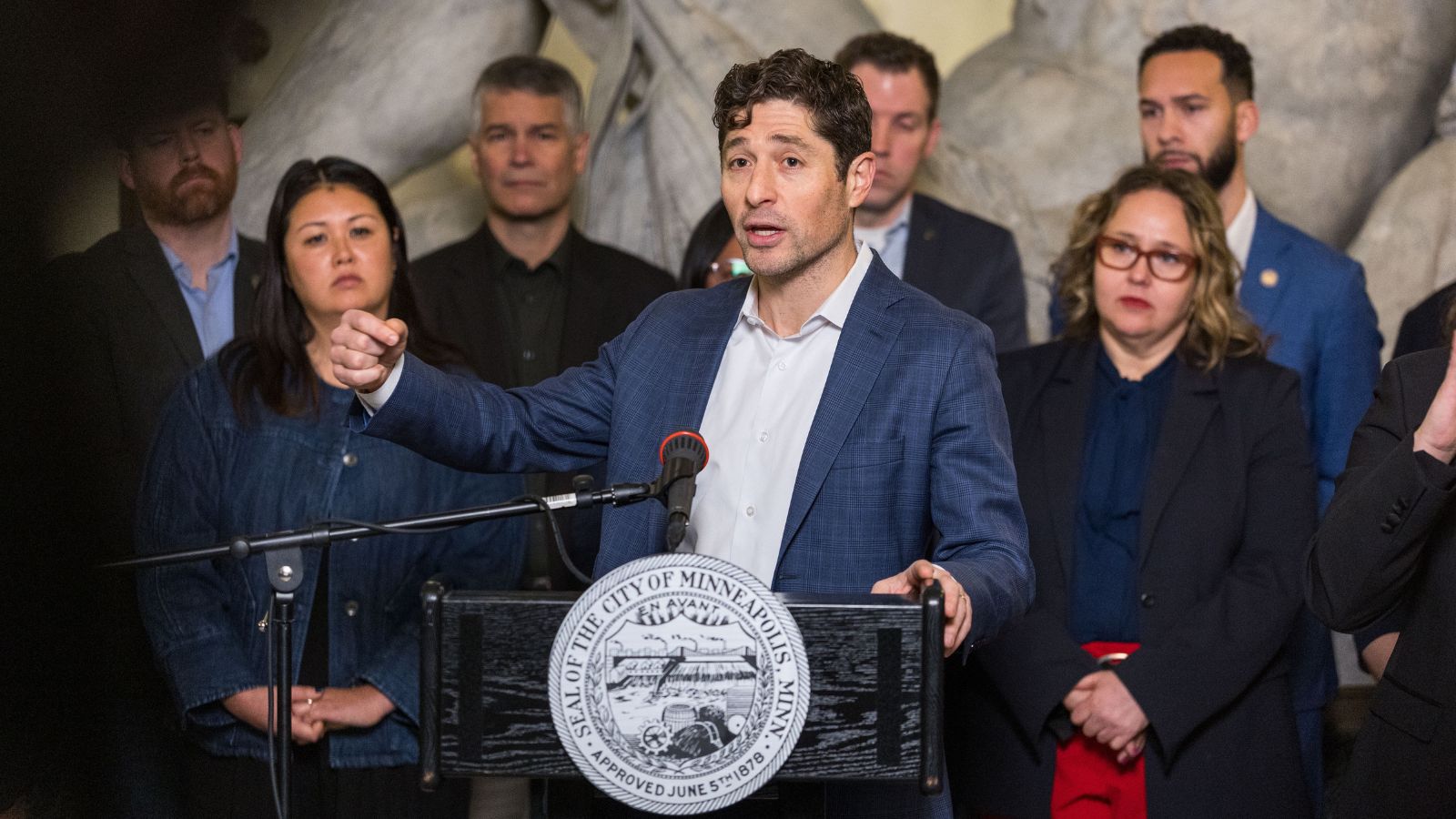
The United States Justice Department (DOJ) is reportedly investigating – and has obtained grand jury subpoenas for – multiple Minnesota state officials (including Governor Tim Walz, Minneapolis Mayor Jacob Frey, Attorney General Keith Ellison, and Hennepin County prosecutor Mary Moriarty) who have publicly voiced opposition to the aggressive and unlawful tactics of federal immigration agents and denounced the fatal shooting by one of them of Renee Good. The investigation apparently centers on an alleged violation of 18 U.S.C. § 372, a Civil War-era statute that prohibits conspiracies to use “force, intimidation, or threat” to prevent a federal officer from discharging their duties.
But there is nothing in the public record to indicate that any Minnesota official has violated this law. Instead, the investigation focuses on their statements criticizing federal tactics, legal filings seeking to hold federal agents accountable, and public guidance to residents about their rights, all of which is First Amendment protected speech. This appears to be another escalation of the administration’s pattern of using criminal investigations and prosecutions to intimidate and punish its political opponents, especially in light of administration’s guilt-presuming statements about the investigation. And given the substantial legal hurdles, the investigation seems highly unlikely to result in criminal convictions.
Want more Democracy Insights?Subscribe to our weekly newsletter
Does publicly opposing federal policy violate the law?
No. The First Amendment provides its strongest protection to “core political speech” – which includes the right of elected officials to criticize government policy and advocate for their constituents.
The government can criminally punish people for some speech, but only when that speech is not protected by the First Amendment. Thus, only words that constitute incitement, a “true threat,” or defamation can qualify as “force, intimidation, or threat” within the meaning of 18 U.S.C. 372. These are narrow exceptions.
Incitement is speech that is intended to and is likely to produce imminent (meaning immediate) lawless action. General advocacy relating to or expressions of disagreement with federal policy is insufficient to meet this definition; rather the speech must directly call for others to engage in immediate and specific unlawful conduct.
Likewise, a “true threat” is generally a serious expression of an intent to commit unlawful violence by a speaker who understands or recklessly disregards that a reasonable person would perceive their words as threatening. Hyperbolic or conditional statements, jokes, and expressions of political opinions do not qualify as “true threats.” In the context of laws prohibiting voter intimidation, an intent to “deprive voters of something they already have, such as jobs, government benefits, or, in extreme cases, their personal safety” may qualify.
Defamation of a public figure, including public officials, is publication or communication of a false statement that damages a person’s reputation while knowing or recklessly disregarding the falsity of the statement. Expressions of opinion about policy matters that cannot be verified as true or false are not generally considered defamatory.
To date, none of the public statements by the Minnesota officials currently under investigation are outside of the First Amendment. Thus, they cannot be criminally punished for their speech.
First, none of the Minnesota officials has suggested that anyone should commit acts of violence against or otherwise do anything unlawful to federal agents. To the contrary, officials have repeatedly urged members of the public to document and engage in peaceful and lawful acts of protest against the tactics of the Department of Homeland Security (DHS). State and local officials have filed lawsuits characterizing the federal government’s immigration operations as “a federal invasion.” And Gov. Walz has called for “accountability” “in the voting booth and in court.” These are established official mechanisms for resolving disagreements over government policy.
Second, these officials have also stated that they have the authority to investigate potential misconduct or crimes by federal agents. This is a correct statement of the law that is clearly protected by the First Amendment. And finally, sharp criticism of federal agents – to include statements characterizing their conduct as dangerous to citizens or as an “occupation”– are core political speech and an integral part of the job description of state government officials in our federal system.
Is there reason to distrust that this investigation is an ordinary and legitimate law enforcement action?
Yes. DOJ’s investigation of Minnesota state officials appears to be part of a larger pattern of using the federal government’s law enforcement powers to intimidate, retaliate against, and punish the administration’s political opponents.
Protect Democracy has previously identified criteria for assessing when an investigation or prosecution is politically motivated or retaliatory in nature. Among them are (1) evidence of political interference with the case and (2) a lack of adherence by prosecutors and other government officials to the law and internal guidelines for the handling of investigations and charges.
Read more: Assessing the Trump DOJ’s investigations and prosecutions Read more: Assessing the Trump DOJ’s investigations and prosecutions
Here, and not for the first time, President Trump provided direct evidence of political interference and a retaliatory motive for the investigations by posting “FEAR NOT, GREAT PEOPLE OF MINNESOTA, THE DAY OF RECKONING & RETRIBUTION IS COMING!” in response to opposition from Minnesota officials and protesters to the shooting of Renee Good and other abuses by DHS agents.
Other federal officials have made prejudicial public statements about the announced investigation that deviate from DOJ’s internal standards for criminal investigations. For example, the Deputy Attorney General, in clear violation of the DOJ’s media policy, accused Gov. Walz and Mayor Jacob Frey of “encouraging violence against law enforcement” and referred to their actions as “terrorism.” He then concluded by saying “I’m focused on stopping YOU . . . by whatever means necessary. This is not a threat. It’s a promise.”
Finally, as noted, there is no publicly available evidence that the officials under investigation did anything that meets the elements of 18 U.S.C. § 372.
All of this is consistent with other investigations the administration has launched against political opponents, several of which have given rise to credible motions to dismiss on the basis of vindictive and selective prosecution and other forms of government misconduct. For example, prosecutions of former FBI Director James Comey and New York Attorney General Letitia James followed a similar pattern of politicized conduct, including statements by the president demanding prosecutions and explaining their retaliatory nature. Their indictments were subsequently dismissed on the ground that the United States Attorney who oversaw them was unlawfully appointed.
In those cases multiple politically-appointed and career prosecutors resigned rather than pursue criminal investigations they believed to be inconsistent with the law and federal criminal charging policies. While not directly related to the investigation of elected Democrats, there has been an exodus of career prosecutors from the United States Attorney’s Office in Minnesota due to political interference in various matters. In other cases, such as that of Kilmar Abrego-Garcia, federal judges have found credible the allegation that the government is using criminal prosecutions to retaliate against political opponents based on conduct by DOJ and other federal officials, such as direct political interference in charging decisions and prejudicial guilt-presuming public statements.
Are the DOJ’s investigations likely to lead to criminal convictions?
No. There are many steps between an investigation and a conviction, all of which will be difficult for DOJ to navigate in circumstances like this. A federal criminal case cannot be charged without the assent of at least 12 grand jurors randomly selected from the local community, who must find that there is probable cause to believe that the proposed indictment is valid. Grand juries have rejected indictments proposed by this administration’s DOJ at an unprecedented rate. And even if indictments are approved, they must survive the scrutiny of federal district court judges, and ultimately, trial juries, who must unanimously agree that the charges have been proven beyond a reasonable doubt. As noted above, these will be high hurdles given the lack of apparent evidence of any crimes by the targeted officials and the substantial evidence of politicized and retaliatory conduct and motives on the part of the president and DOJ officials.
Related Content
-
The SAVE tool, explained
- Protecting Elections
- Research & Analysis
- Explainer
-
Frequently asked questions about the 2026 midterm elections
- Protecting Elections
- Research & Analysis
- Explainer
-
Tracking retaliatory use of arrests, prosecutions, and investigations by the Trump administration
- Stopping the Consolidation of Power
- Research & Analysis
- Analysis
-
The ‘blue shift’ and ‘red mirage’ in election results, explained
- Protecting Elections
- Research & Analysis
- Analysis
Join Us.
Building a stronger, more resilient democracy is possible, but we can’t do it alone. Become part of the fight today.
Donate
Sign Up for Updates Sign Up for Updates
Explore Careers Explore Careers
How to Protect Democracy How to Protect Democracy