What gerrymandering costs voters
- September 17, 2026
Report: Quantifying the practical costs of the forever redistricting wars on American voters
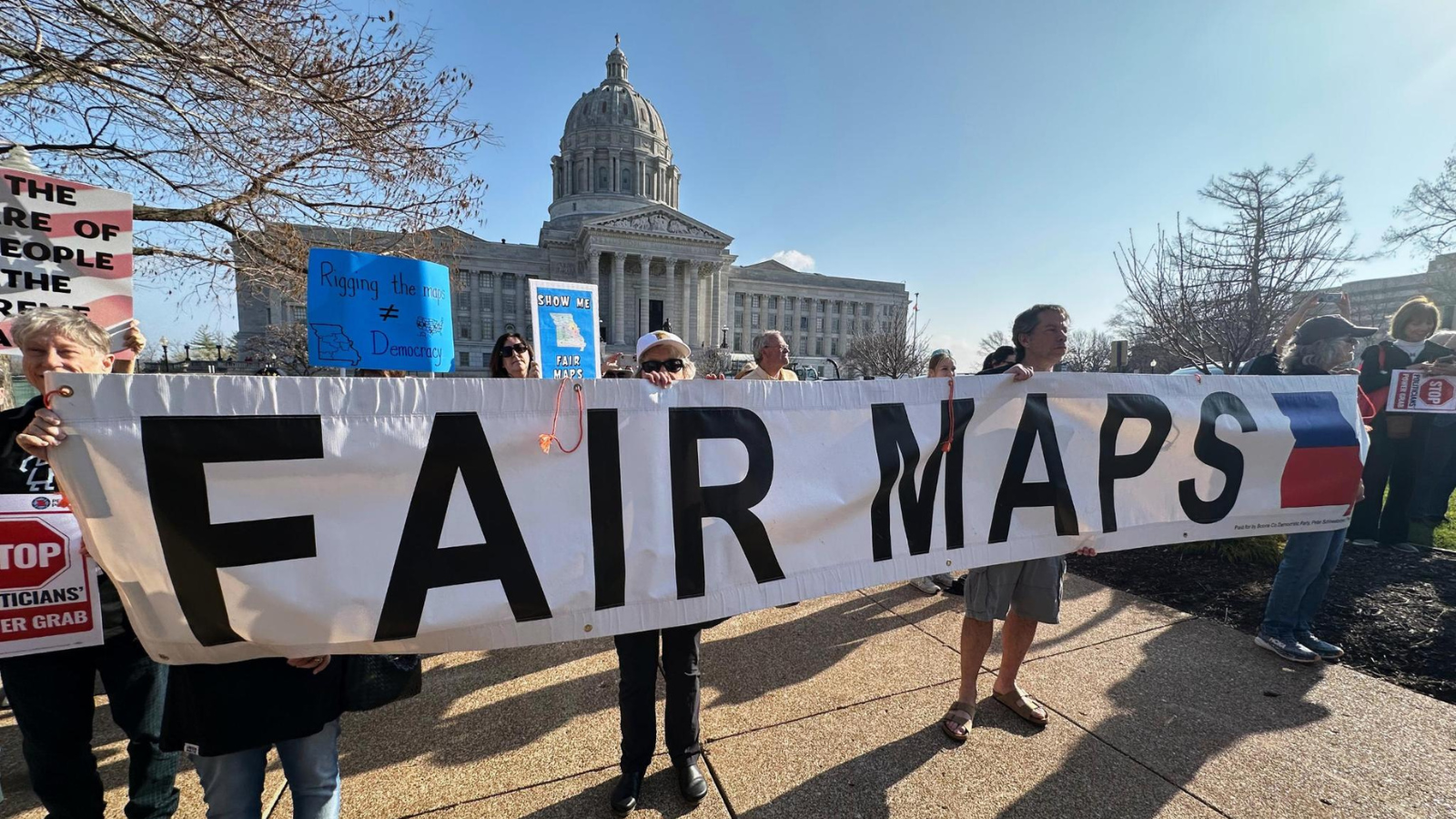
More than 34 million Americans have been impacted by mid-decade redistricting
Roughly one in 10 Americans were reassigned to a different congressional district between 2024 and 2026, a new Protect Democracy analysis finds. In 2025 and 2026, spurred by President Donald Trump’s push for maximalist partisan gerrymandering in Republican-controlled states and the Supreme Court’s gutting of the Voting Rights Act, a modern record of nine states re-drew their congressional districts.
Read our new report: Gerrymandering Whiplash Read our new report: Gerrymandering Whiplash
The United States may see near-perpetual maximalist gerrymandering, with many or even most states redistricting more than once a decade. But while the impacts of this “gerrymandering war” are usually discussed in partisan and political terms — which party benefits? — the significant costs for voters and their representation are often ignored.
The practical costs of the forever redistricting wars on American voters
Gerrymandering whiplash we see today has six main potential consequences:
- Severed electoral accountability and representation. Elected leaders running for reelection are meant to be evaluated, at least in part, based on the job they did in office. When a person’s representative changes like this, voters no longer have any reference point with which to evaluate their candidates.
- Ballot confusion and default to partisanship. Because these new districts were drawn in the months before elections are held, many voters will find unfamiliar names on their ballot. This kind of confusion only increases reflexive partisanship on the part of voters and elected officials.
- More difficult election administration, including potential errors. Redistricting on tight timelines puts enormous pressure on election officials, who have to produce many new permutations of ballots — not to mention complex logistics around polling places, processes, and staffing — with little time to test or rehearse. This inevitably results in, at best, confusion, and at worst, mistakes.
- Difficulty of political organizing. Organizing at the district level relies on pulling together the same group of people cycle after cycle. If voters are being shunted around by their elected leaders every two or four years, creating sustainable momentum becomes nearly impossible. Instead, every new redistricting cycle means that organizers, regardless of what they’re advocating for, have to start again at square one.
- Lack of an ongoing relationship with representatives. House members are meant to be the voice of their district in Congress, but if every cycle brings with it a totally new district with many different people in it, that relationship between constituent and representative breaks down.
- Voter apathy and disengagement. All of the issues enumerated above are eventually going to further the belief of some voters that elections aren’t worth the trouble. If a voter is shunted from district to district every two or four years, they will begin to feel like their elected leaders are choosing them, not the other way around.
Solutions
Constant gerrymandering whiplash is not inevitable. But, most solutions only go so far. In the long term, the most effective and permanent solution would be to move to a system of multi-member districts and proportional representation.
Proportional representation is uniquely suited to solve the gerrymandering problem because it effectively fosters representative stability instead of disruption. Because multi-member districts cultivate electoral competition across larger geographic areas, that means any individual voter has the opportunity to be meaningfully represented across multiple elections, and even across decades, regardless of political trends.
Even if district lines are moved or political fortunes shift dramatically — representation doesn’t have to.
Read Gerrymandering Whiplash, our newest report on the consequences of redistricting Read Gerrymandering Whiplash, our newest report on the consequences of redistricting
Additional resources
Multipartyism in a multiracial democracy Multipartyism in a multiracial democracy
How proportional representation relates to the Voting Rights Act How proportional representation relates to the Voting Rights Act
Read the letter signed by over 500 scholars: Proportional Representation is the fix Read the letter signed by over 500 scholars: Proportional Representation is the fix
How to end gerrymandering How to end gerrymandering
Related Content
-
Frequently asked questions about the 2026 midterm elections
- Protecting Elections
- Research & Analysis
- Explainer
-
The ‘blue shift’ and ‘red mirage’ in election results, explained
- Protecting Elections
- Research & Analysis
- Analysis
-

DOJ’s attempt to acquire state voter data, explained
- Protecting Elections
- Research & Analysis
- Explainer
-

Understanding federal demands for election records
- Protecting Elections
- Research & Analysis
- Toolkit
Join Us.
Building a stronger, more resilient democracy is possible, but we can’t do it alone. Become part of the fight today.
Donate
Sign Up for Updates Sign Up for Updates
Explore Careers Explore Careers
How to Protect Democracy How to Protect Democracy