Zachary West serves as counsel, national security at Protect Democracy, working to promote healthy civil-military relations and mobilize national security leaders to defend U.S. democracy.
No, the president cannot declare martial law to interfere with elections
- November 2, 2026
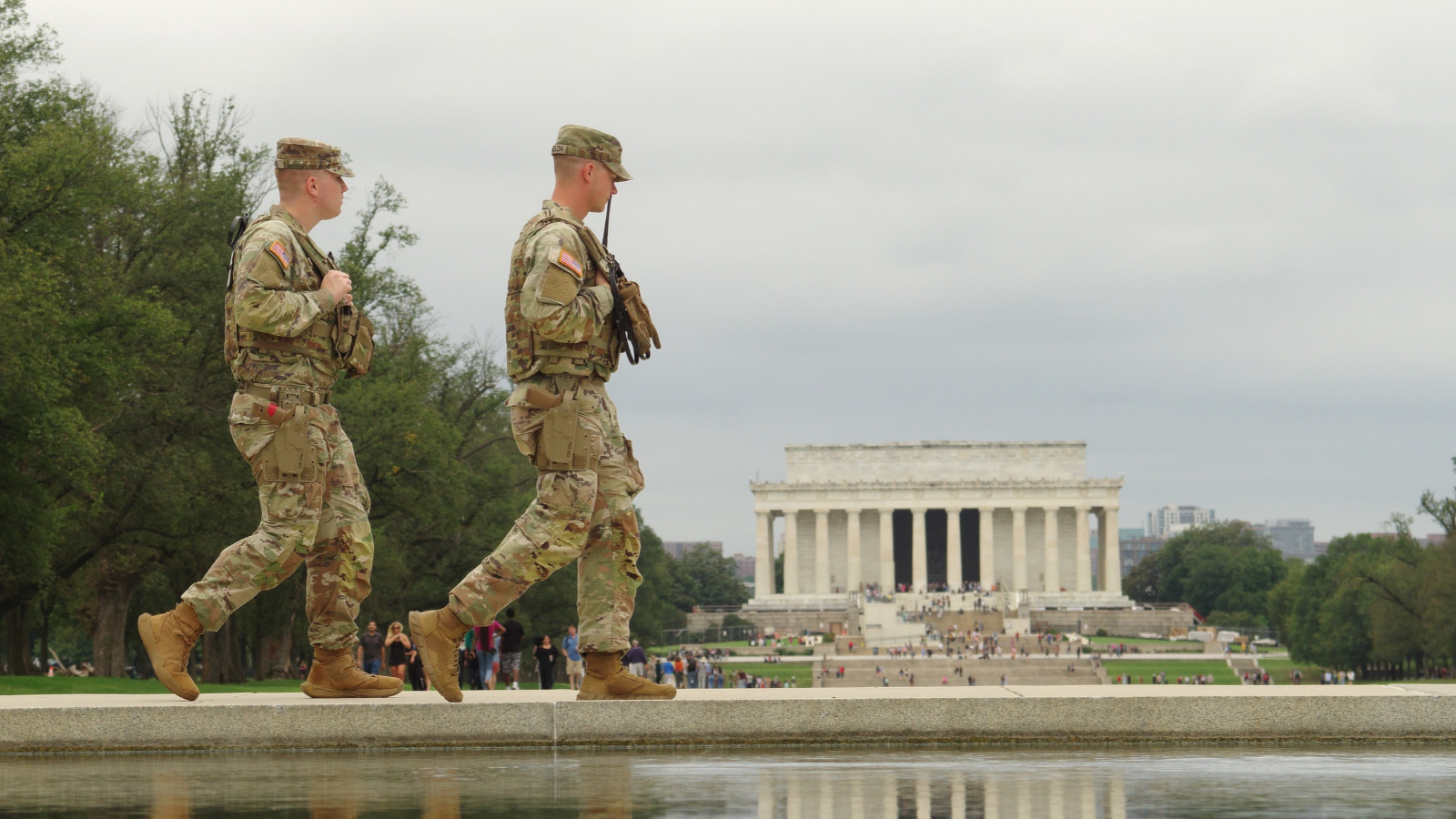
The president does not have the authority to declare martial law. No provision in the Constitution grants it and no federal law authorizes it.
Still, some in the president’s orbit have begun suggesting that if the midterm election results don’t favor his party, he should declare martial law. Those calls follow a months-long effort by the president and his allies to interfere with the elections.
Martial law — where the military replaces civil authorities in the administration of domestic government — would be a serious escalation in this administration’s attacks on the rule of law. Fortunately, it’s also highly unlikely.
A presidential declaration of martial law has no basis in American law. Here’s why:
Why the president can’t declare martial law
Unlike leaders in some other countries, the president of the United States has no power to declare martial law. There is no mention of martial law anywhere in the Constitution, and no federal statute permits it. Further, the Supreme Court has never directly ruled that the federal government has the authority to declare martial law.
Read more: Can federal law enforcement or troops be deployed to the polls? Read more: Can federal law enforcement or troops be deployed to the polls?
The president’s role as commander in chief does not give him the authority to use the military to displace civilian government or meddle in our elections. Indeed, in the aftermath of the Civil War, the U.S. Supreme Court in Ex parte Milligan (1866) confirmed that martial law cannot replace civilian government and the military cannot try civilians in tribunals when regular courts are open and functioning.
Some governors, on the other hand, can declare martial law in their own states. But a governor’s declaration of martial law leaves fully operative every protection, right, and limitation in the federal Constitution and federal law, and state actions would be subject to judicial review. That is: Governors cannot use a declaration of martial law to undermine citizens’ constitutional rights or interfere with the conduct of elections.
What about the Insurrection Act?
The president and his have allies have also raised the possibility of invoking the Insurrection Act, which permits the president to use the federal military domestically to suppress “any insurrection, domestic violence, unlawful combination, or conspiracy,” or when state and federal law enforcement are unable or unwilling to enforce federal law and the U.S. Constitution.
However, invoking the Insurrection Act would not amount to a declaration of martial law.
Read more: The Insurrection Act, explained Read more: The Insurrection Act, explained
Under the Posse Comitatus Act, members of the federal armed forces are barred from participating in civilian law enforcement activities unless doing so has been “expressly authorized” by Congress. The Insurrection Act is one of the key exceptions to that law. Historically, its use has been limited to severe instances of civil unrest — the Civil War, Reconstruction, and certain violent incidents during the Labor Movement — and to defend the rights of marginalized groups, such as during the Civil Rights Movement. Troops deployed under these circumstances are allowed to directly perform civilian law enforcement actions like making arrests, detaining citizens, and enforcing court orders.
But the Insurrection Act does not suspend the Constitution, authorize the president to impose martial law, or exempt the military from following all applicable state and federal laws. Troops deployed under the act must still respect constitutional rights and the civil liberties of all Americans, and their actions remain subject to review by the courts.
About the Authors



Related Content
-

DOJ and DHS sued over baseless threats to prosecute election workers
- Protecting Elections
- Litigation
- Statements
-
Appeals court keeps protections against DHS’s armed home visits in place
- Protecting Elections
- Litigation
- Statements
-
Defending election workers from unlawful threats and coercion
- Protecting Elections
- Litigation
- Case Documents
-
Challenging DHS’s field investigations into voter eligibility
- Protecting Elections
- Litigation
- Case Documents
Join Us.
Building a stronger, more resilient democracy is possible, but we can’t do it alone. Become part of the fight today.
Donate
Sign Up for Updates Sign Up for Updates
Explore Careers Explore Careers
How to Protect Democracy How to Protect Democracy